Working with Art Consultants on Interior Design Projects
What a production partner can do to make a consultant's job easier
By Dan St. Andrei, Creative Director, Conceptiones · Professional Practice · 6 min read · Image: Dan St. Andrei
An art consultant carries a great deal. They interpret the client’s ambitions, develop a curatorial direction, identify artists, manage a budget, and answer to an owner, a designer and a contractor, usually all at once. Their value lies in judgment and relationships, and neither is helped by having to chase a supplier for a delivery date.
A producer sits at a different point in the same project. Our job is to make the works exist, in the right materials, in the right sizes, at the right time, and to the standard that was promised. When consultant and producer understand each other’s roles, the project runs more calmly. When they do not, the problems tend to surface late, and they tend to be expensive.
Two kinds of expertise
A consultant knows what a project needs from an artistic and commercial point of view. A producer knows what it takes to make it. The overlap is where most misunderstandings begin.
The consultant may propose an image that looks right on screen but needs a surface, a size or a finish that behaves differently in reality. The producer may know that a particular format is sensible, while a slightly different one avoids a seam, a delay or a cost. Neither person is wrong. They simply see different parts of the problem, which is why early conversation is so useful.
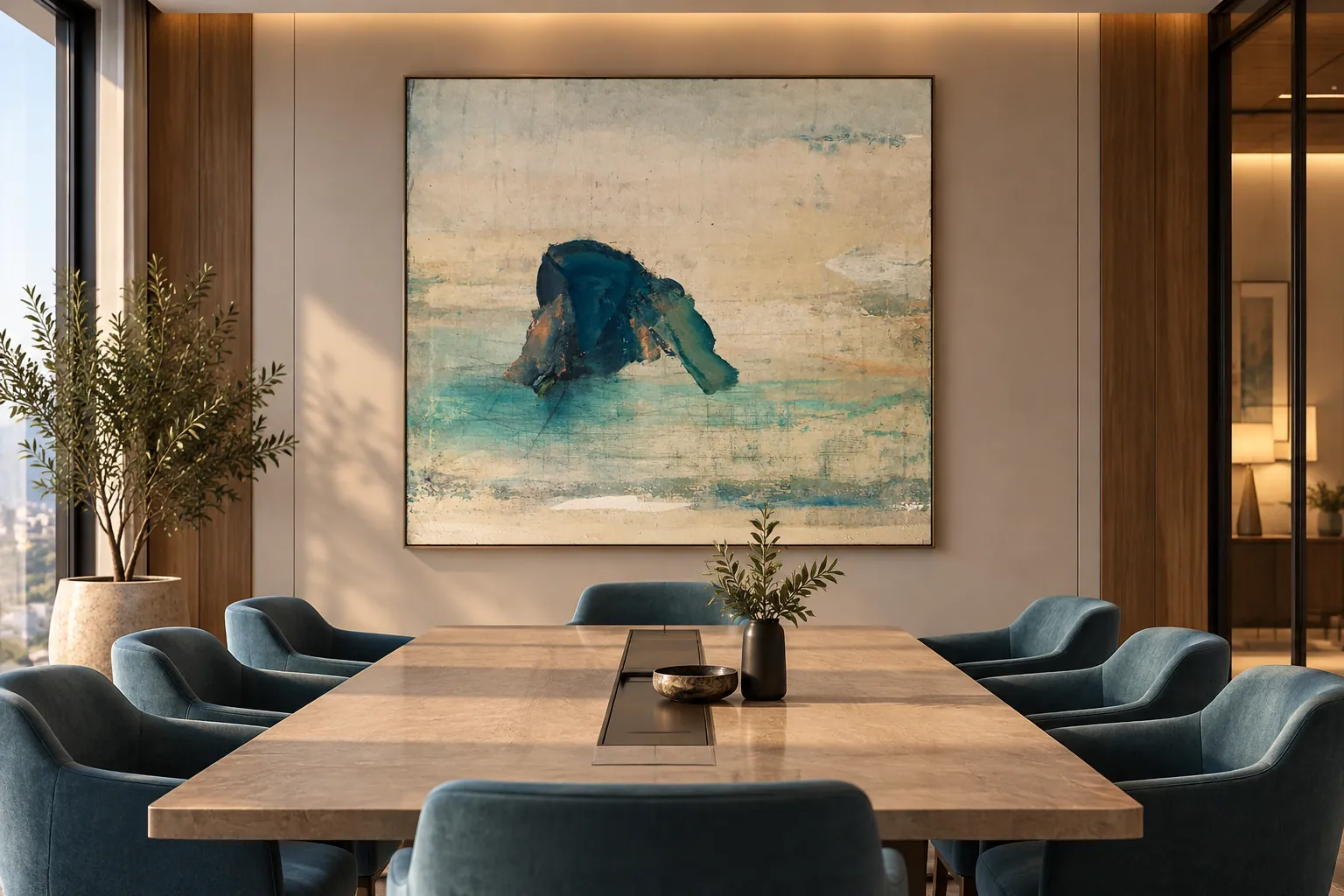
Artwork decisions are strongest when curatorial and spatial priorities are considered together. Editorial visualisation featuring real artwork by Adrian Dica.
Bring the producer in early
The single most useful habit is involving production before decisions harden. A short discussion at concept stage can answer questions that would otherwise return as problems:
Is the proposed format achievable at the quality required?
Which materials suit the location, and which will struggle with light, humidity or handling?
What are the realistic lead times for proofing, production, framing and delivery?
Where might cost rise, and where is there room to save without damaging the result?
It costs very little to ask these things early, and a great deal to discover the answers after a contract is signed.
What a consultant can reasonably expect
A good producer should offer:
One point of contact. Someone who knows the project, answers promptly and can speak for the production side.
Clear, itemized costs. Production, framing, packing, transport and installation shown separately, so budgets can be tested and adjusted.
Honest timelines. Dates built backward from the opening, with risks flagged as they appear rather than after they have become delays.
Proofs and samples. Approval before commitment, so that color, texture and detail are agreed on the actual material.
Discretion. Many projects are confidential. Names, plans and images are handled accordingly.
Documentation. Records of each work, its materials, edition details, dimensions and care requirements, delivered in a form the consultant can pass directly to the client.
Early coordination connects artwork scale, palette and placement with the interior design. Editorial visualisation featuring real artwork by Adrian Dica.
What a producer needs in return
Collaboration runs in both directions. Producers do their best work when they receive:
A usable brief. Drawings, dimensions, a schedule of locations, and a clear statement of which works are fixed and which are still open.
Files and specifications that are final. Changes to artwork or format after production has started are possible, but they carry a cost in time and money that should be understood.
Timely decisions. A feedback cycle of a week can sit comfortably in a project. One of a month often cannot.
A single voice from the client side. When approvals come from several directions, someone, ideally the consultant, needs to reconcile them before they reach production.
Early notice of change. If the layout shifts, the opening moves or the budget is revised, tell the producer straight away. Most changes can be absorbed when they are small and early.
Respecting the consultant’s relationships
A production partner should never undermine the consultant’s position. The client relationship, the curatorial voice and the artist introductions belong to the consultant, and a producer who tries to take them over is a risk to the project. Our role is to strengthen the consultant’s proposal with practical knowledge, and to deliver what was agreed.
That also means being straightforward when something is not feasible. A clear no, with an alternative, is more useful than a hopeful yes that collapses later.
Where the project is won
Most art projects are not won on the day of the pitch or lost at the installation. They are decided in the quiet middle: the weeks of proofs, approvals, schedules and small adjustments, when a good working relationship between consultant and producer keeps everything moving.
That relationship is built on ordinary things: replies that arrive when promised, numbers that hold, problems reported early. It is not glamorous, and it is what clients experience as professionalism.
At Conceptiones, we develop and produce art for hospitality, interior design and architecture, and we work alongside consultants, architects and designers throughout. If you are planning a project and would like to see how we could support it, please begin with the Discuss a Project page.
Frequently asked questions
When should a producer be involved in an art project?
At concept stage, before decisions harden. A short early discussion answers questions about format, materials, lead times and cost that would otherwise return as problems after a contract is signed.
What can an art consultant expect from a production partner?
One point of contact, itemized costs, honest timelines built backward from the opening, proofs and samples approved before commitment, discretion on confidential projects, and documentation of each work.
What does a producer need from the client side?
A usable brief with drawings and dimensions, final files and specifications, timely decisions, a single voice reconciling approvals, and early notice of any change.
Where are art projects usually won or lost?
In the quiet middle of the project: the weeks of proofs, approvals, schedules and small adjustments, when a good relationship between consultant and producer keeps everything moving.
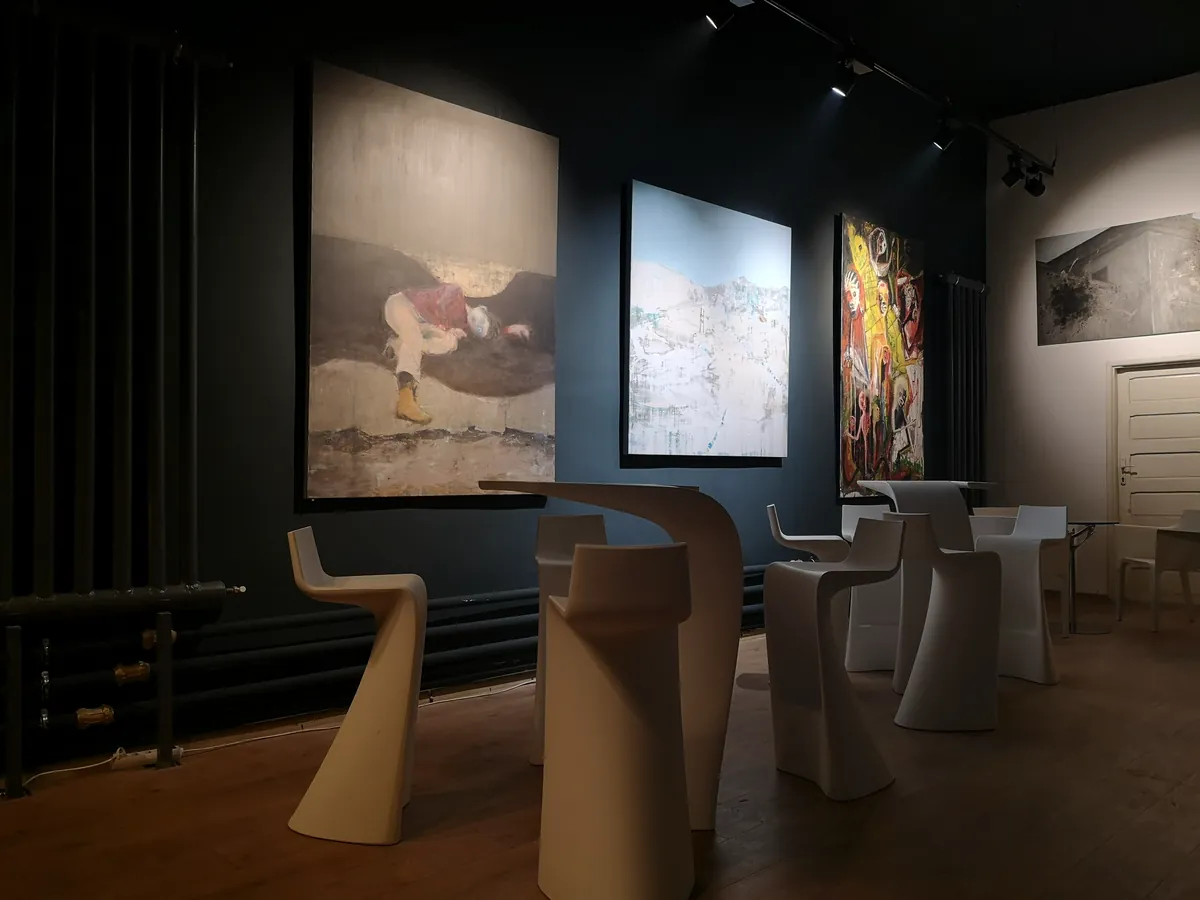
Interior design and fit-out conceived as a collector's room, bringing together approximately 20 original paintings, sculptures and photographs by Bojin, Adrian Dica, Augustin Radu and Dan St. Andrei—all available to acquire.