Custom Artwork for Hotels: Commissioning Site-Specific Work
What changes when art is made for one wall, one room, one building
By Dan St. Andrei, Creative Director, Conceptiones · Art in Spaces · 6 min read · Image: Dan St. Andrei
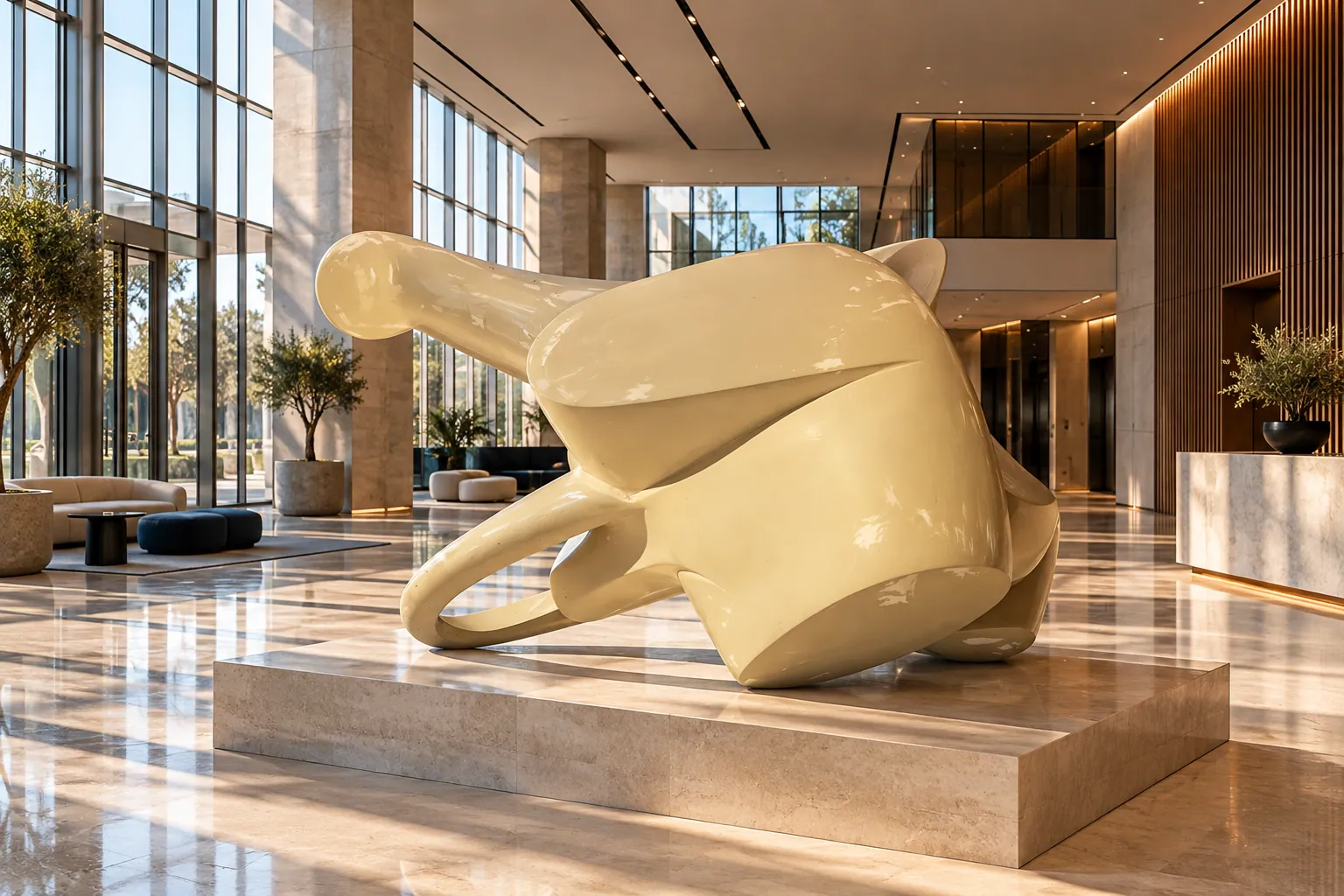
A work made for a particular place behaves differently from one chosen from a portfolio. It has been measured against the room. It knows where the light comes from and how far a guest stands from it when they check in. Nobody has to wonder whether it fits, because fitting was the brief.
That is the appeal of commissioning, and also its difficulty. You are buying something that does not yet exist, from a person whose process you cannot fully control. Done carelessly, it produces expensive disappointment. Done well, it produces the one piece in a project that people actually remember.
When a commission is worth it
Not every wall deserves one. Commissions earn their cost in a few specific situations:
A location that dominates the space, such as a lobby wall, a stairwell, or the end of a long corridor, where an off-the-shelf format would never be quite right.
A property whose story is specific enough that existing work only approximates it.
A feature that will be photographed, discussed and remembered, and therefore needs to be unrepeatable.
Unusual dimensions or materials that a standard piece cannot meet.
For secondary spaces, a well-chosen existing work or a limited edition is usually the more sensible answer. A good program mixes both, and knows which is which.
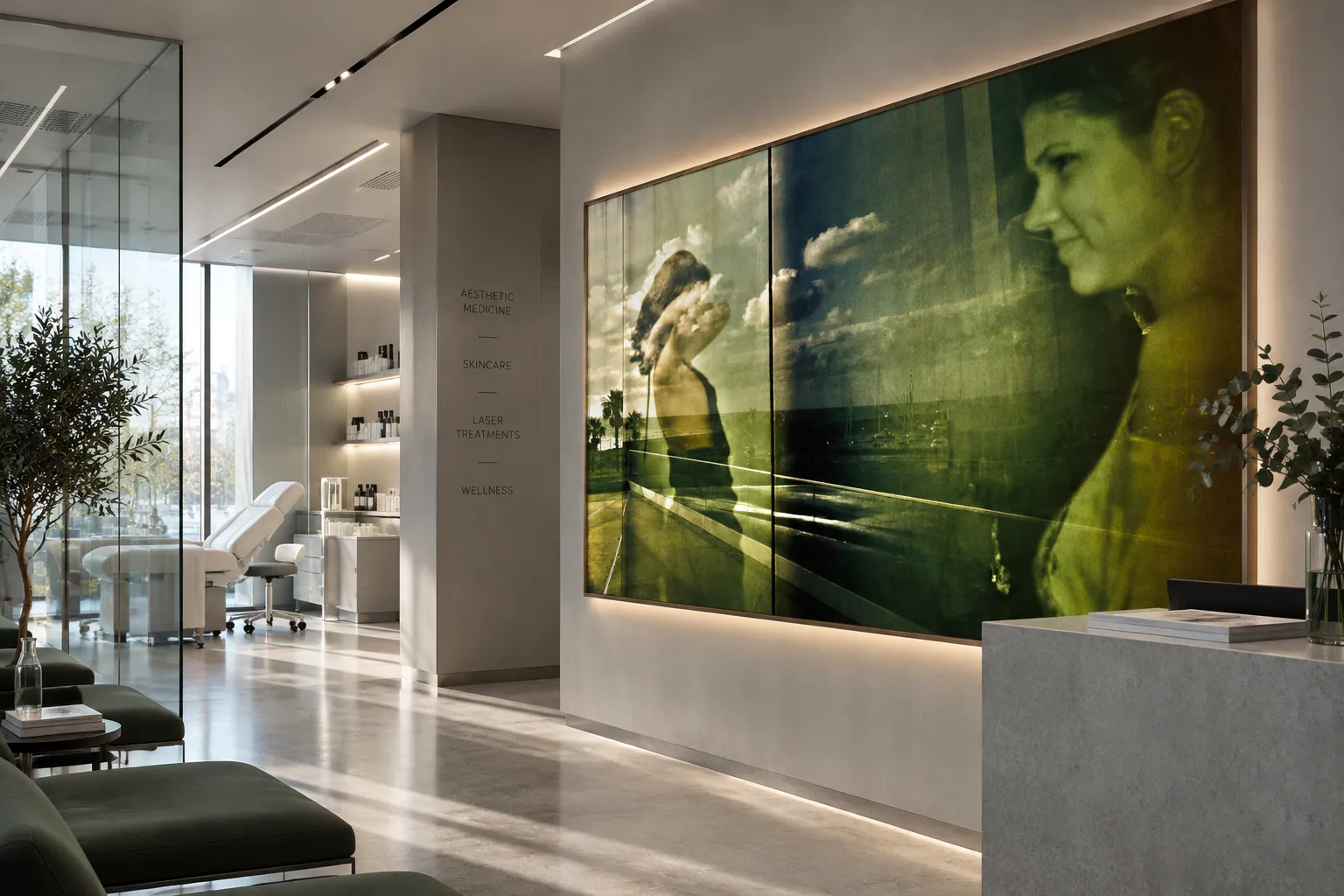
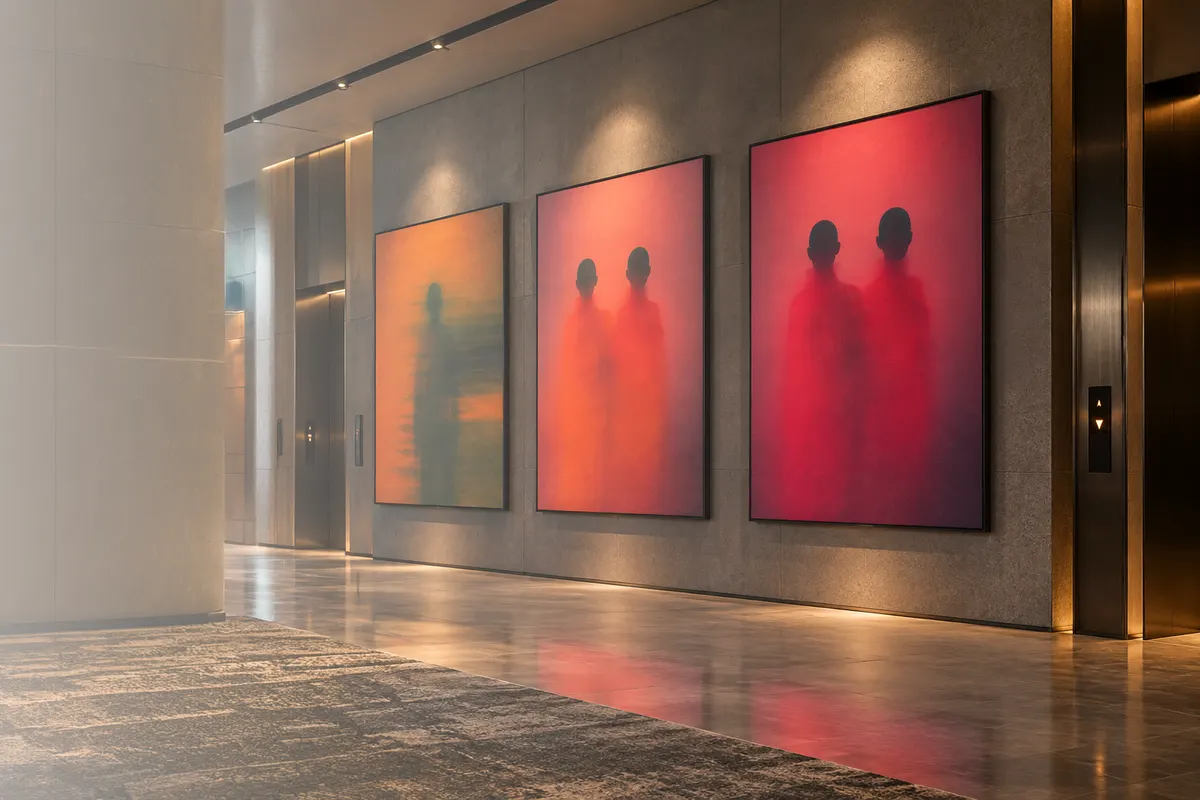
A site-specific work responds to scale, circulation and viewing distance. Editorial visualisation featuring real artwork by Iulian Cristea.
Start with the brief, and keep it short
Artists tend to respond better to a clear problem than to a long list of wishes. A useful commission brief covers the location and its dimensions, the way the space is used, the lighting, the budget, the deadline, and a few sentences on what the property is and who it is for. Photographs and plans help more than adjectives.
What the brief should leave open is the answer. If you already know exactly what you want, you are ordering, not commissioning. The point is to give a capable artist room to find something you could not have specified.
Choosing the artist
Look for evidence that the person can work to a context. Many accomplished artists have never made anything for a fixed location with a fixed schedule, and it shows. Ask to see earlier commissions, and ask what went wrong on them. A candid answer tells you more than a polished portfolio.
Fit matters more than reputation. An artist whose existing work already shares something with the space, whether in scale, palette, material or mood, will usually produce a better result than a famous name stretched to suit.
The stages that protect everyone
Proposal. The artist presents an idea, with sketches or studies, placed in the room at scale. This is the cheapest point at which to change direction.
Agreement. Scope, fee, payment schedule, timeline, ownership, reproduction rights and credit are written down and signed before work starts. Disagreements over any of these are far easier to settle on paper than in a half-finished studio.
Development. Materials are confirmed, samples are made, structural questions are answered. For anything heavy, suspended or fixed to a wall, an engineer or installer should be involved here, not at delivery.
Review. Agree in advance on the moments when the client will see work in progress, and on what kind of feedback is useful at each. Late changes of heart are the most common source of cost overruns.
Completion and installation. The piece is inspected, packed, delivered and fitted with the artist or a trusted installer present. Lighting is adjusted on site, because a work that looked right in the studio often needs a second look under the room’s own lamps.
Handover. The client receives documentation: title, materials, dimensions, care instructions, fixing details, and the rights agreement.
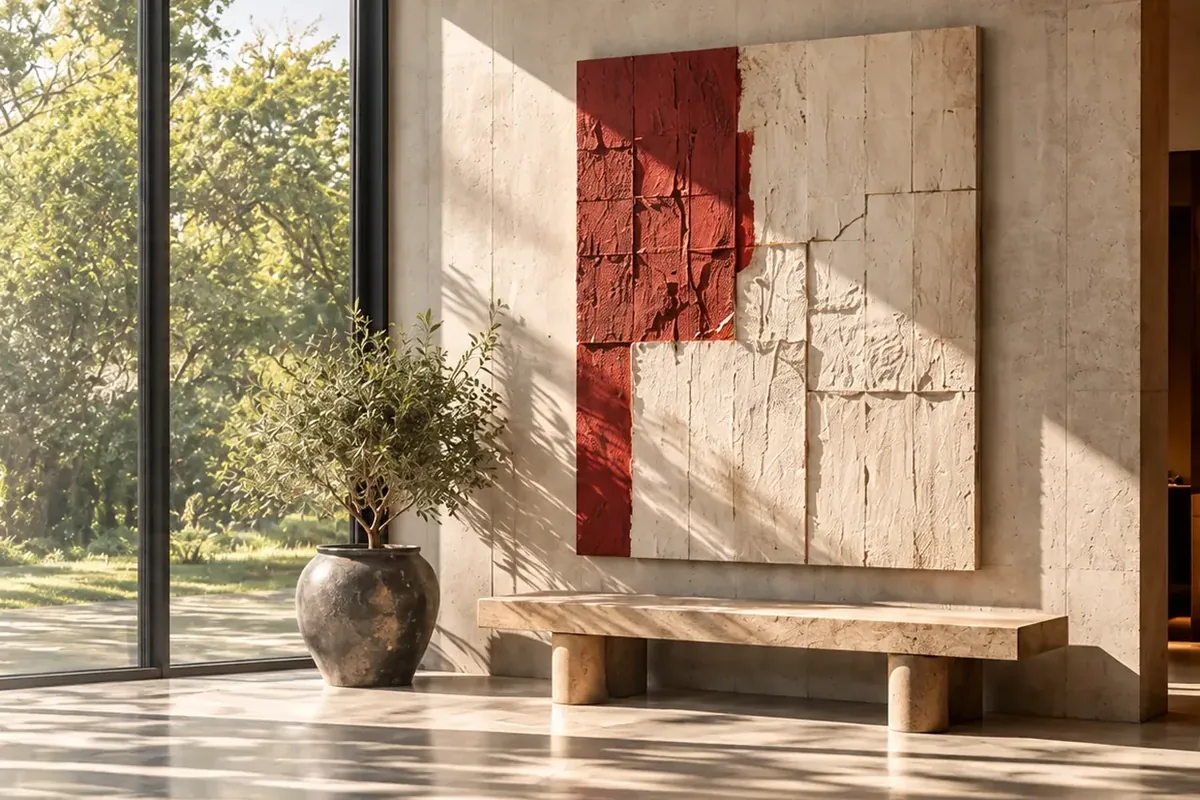
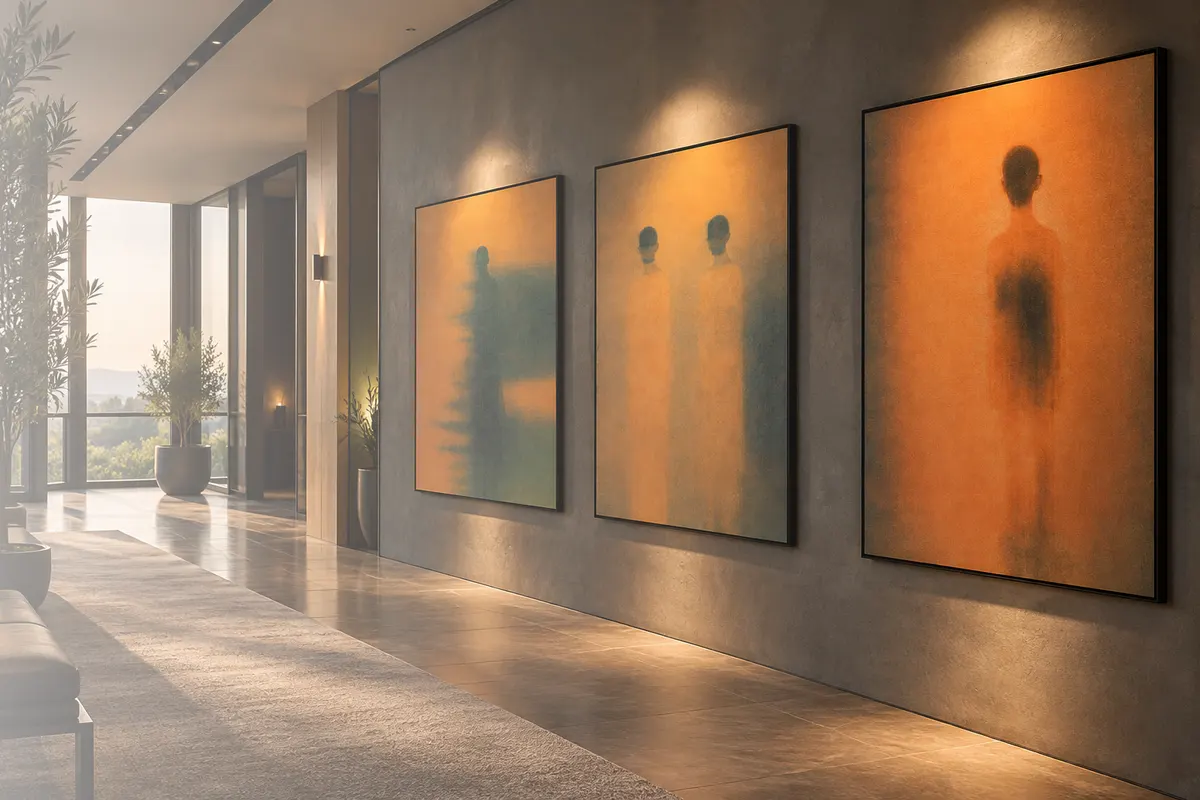
Commissioned artwork can be developed for a precise wall and architectural context. Editorial visualisation featuring real artwork by Dan St. Andrei.
What goes wrong, and how to avoid it
Most failed commissions fail quietly, and for ordinary reasons. The brief was vague. The budget left no room for fabrication, transport or installation. The approval chain was unclear, so three people gave three opinions. The deadline was set by the opening date rather than by how long the work takes.
Build in time. Original work has its own pace, and compressing it rarely improves it. A buffer of a few weeks before the date you actually need the piece is cheaper than any rescue.
Decide who speaks for the client, and make that person the single route for feedback. An artist working from one clear voice will deliver better work than one trying to reconcile a committee.
Think about the afterlife
A commissioned piece will outlast the people who ordered it. Ask now how it will be cleaned, who is allowed to move it, and what happens if the room is redesigned. Record the answers. Properties that keep good records of their commissions find them far easier to insure, to value, and to talk about.
At Conceptiones, we develop and produce art for hospitality, interior design and architecture, including work made for a specific place. If you have a space in mind that deserves something of its own, tell us about it on the Discuss a Project page.
Frequently asked questions
When is commissioning art worth it?
For dominant locations such as a lobby wall or stairwell, for a property whose story existing work only approximates, for a feature that needs to be unrepeatable, and for unusual dimensions or materials a standard piece cannot meet.
What should a commission brief include?
The location and its dimensions, how the space is used, the lighting, the budget, the deadline, and a few sentences on what the property is and who it is for, supported by photographs and plans. It should leave the answer open.
What should a commission agreement cover?
Scope, fee, payment schedule, timeline, ownership, reproduction rights and credit, written down and signed before work starts.
Why do commissions go wrong?
A vague brief, a budget with no room for fabrication, transport or installation, an unclear approval chain, and deadlines set by the opening date rather than by how long the work takes.
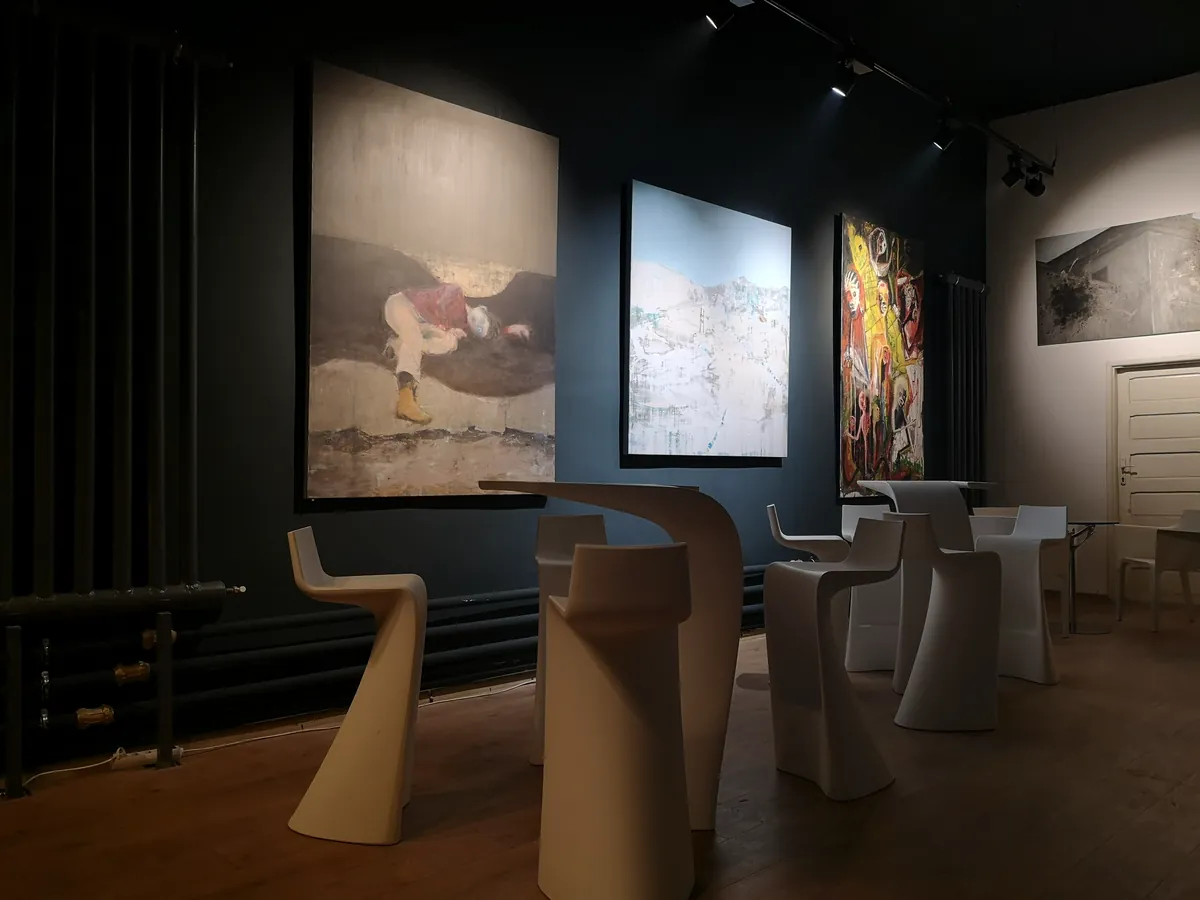
Interior design and fit-out conceived as a collector's room, bringing together approximately 20 original paintings, sculptures and photographs by Bojin, Adrian Dica, Augustin Radu and Dan St. Andrei—all available to acquire.