Why the first room a guest sees deserves the most careful thinking about art
By Dan St. Andrei, Creative Director, Conceptiones · Art in Spaces · 6 min read · Image: Dan St. Andrei
People decide quickly. Within a few seconds of walking through the door they have a view about whether a place is generic or particular, careful or careless, warm or cold. The lobby is where that view forms, and art is one of the few things in it that can speak to all of those questions at once.
Treating the lobby like a gallery does not mean filling it with objects. It means applying the discipline a gallery applies: deciding what is shown, how it is lit, where people will stand, and what they will remember.
Sequence matters
A lobby is a journey with a rhythm. There is the threshold, the approach to reception, the waiting area, the route to the lifts or the restaurant. Each has a different pace and a different kind of attention.
Near the entrance, people are still adjusting. They respond to scale and clarity. A single work with real presence, visible from the door, tells them something about the place before anyone has spoken. At reception, attention is divided, so the art should support the moment rather than compete with it. In lounges and seating areas, where people wait, there is time to look closely, and finer detail pays off.
Think of it as a short exhibition with a beginning, a middle and a quiet end.
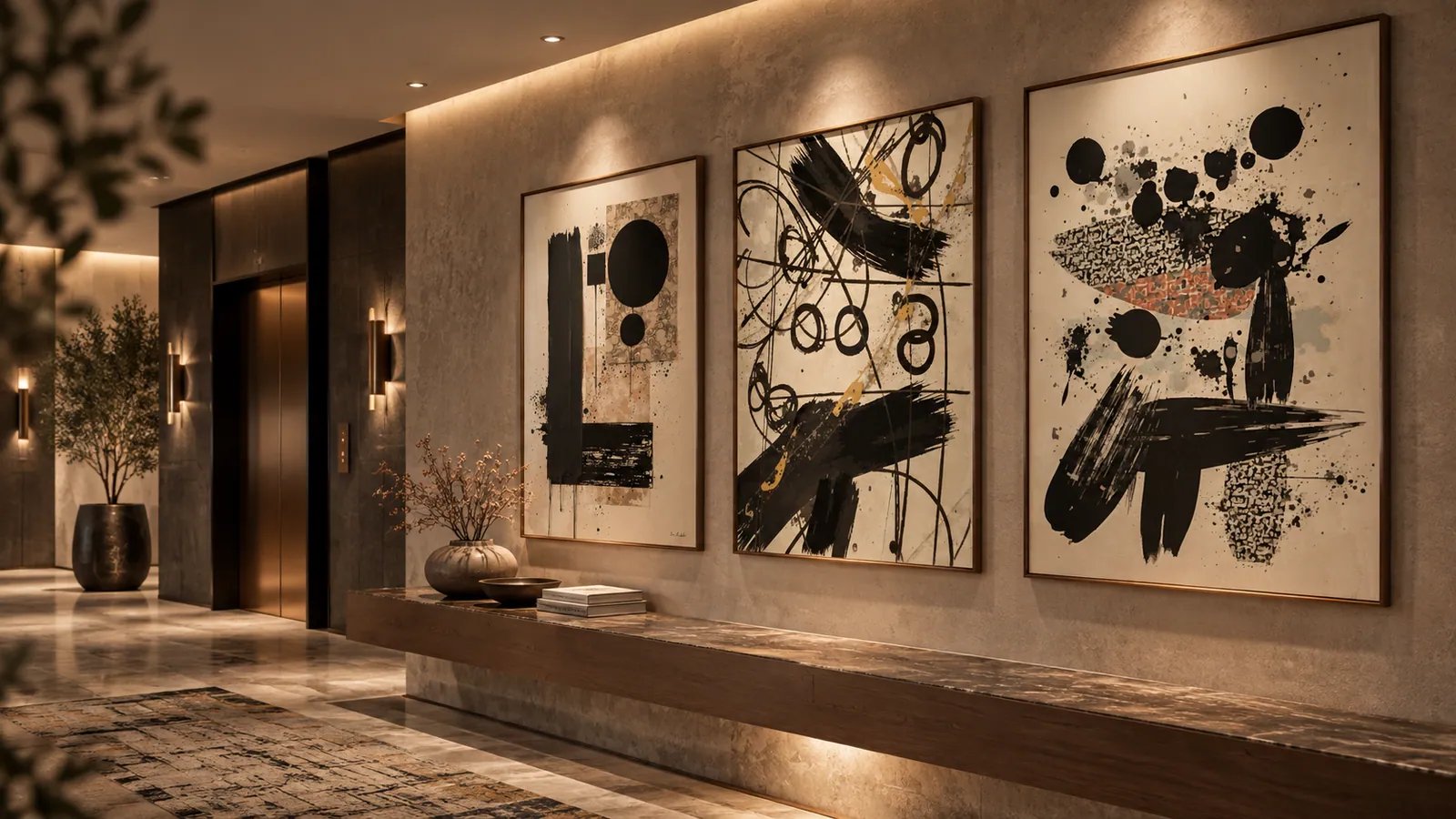
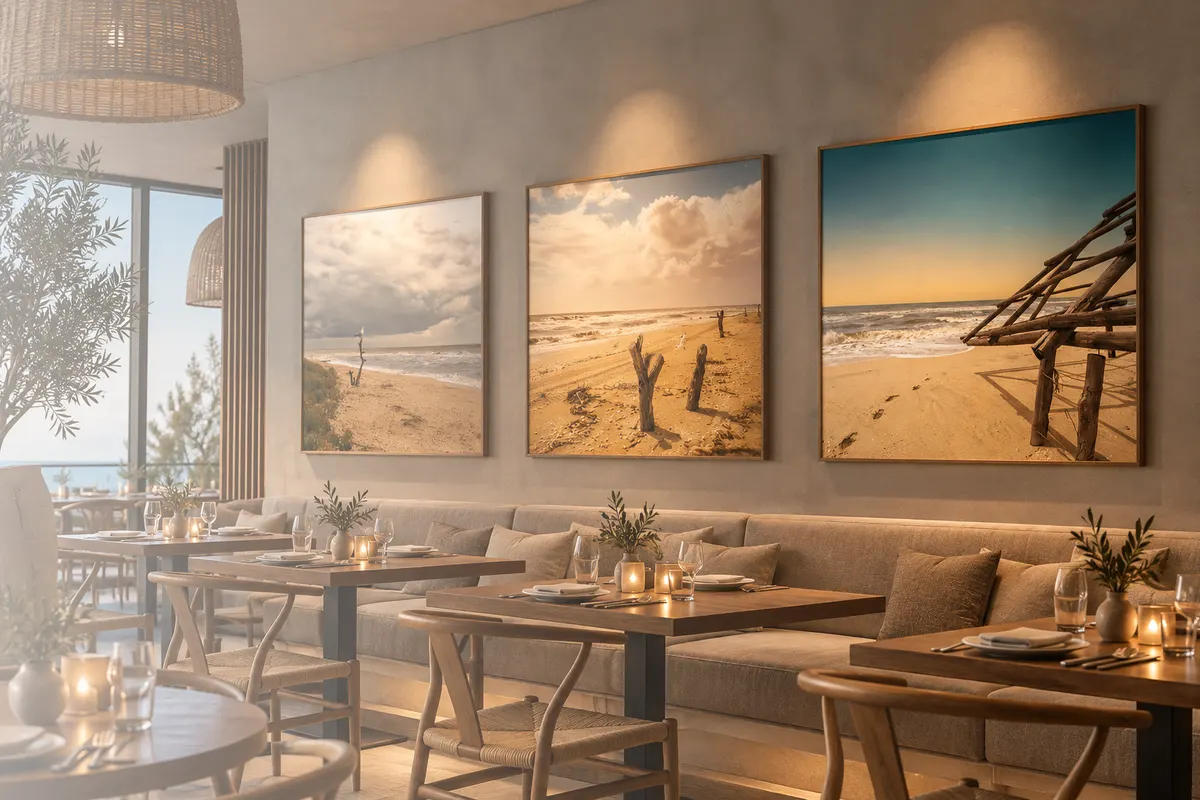
Sequence and spacing turn a circulation wall into a coherent gallery experience. Editorial visualisation featuring real artwork by Dan St. Andrei.
Scale and silence
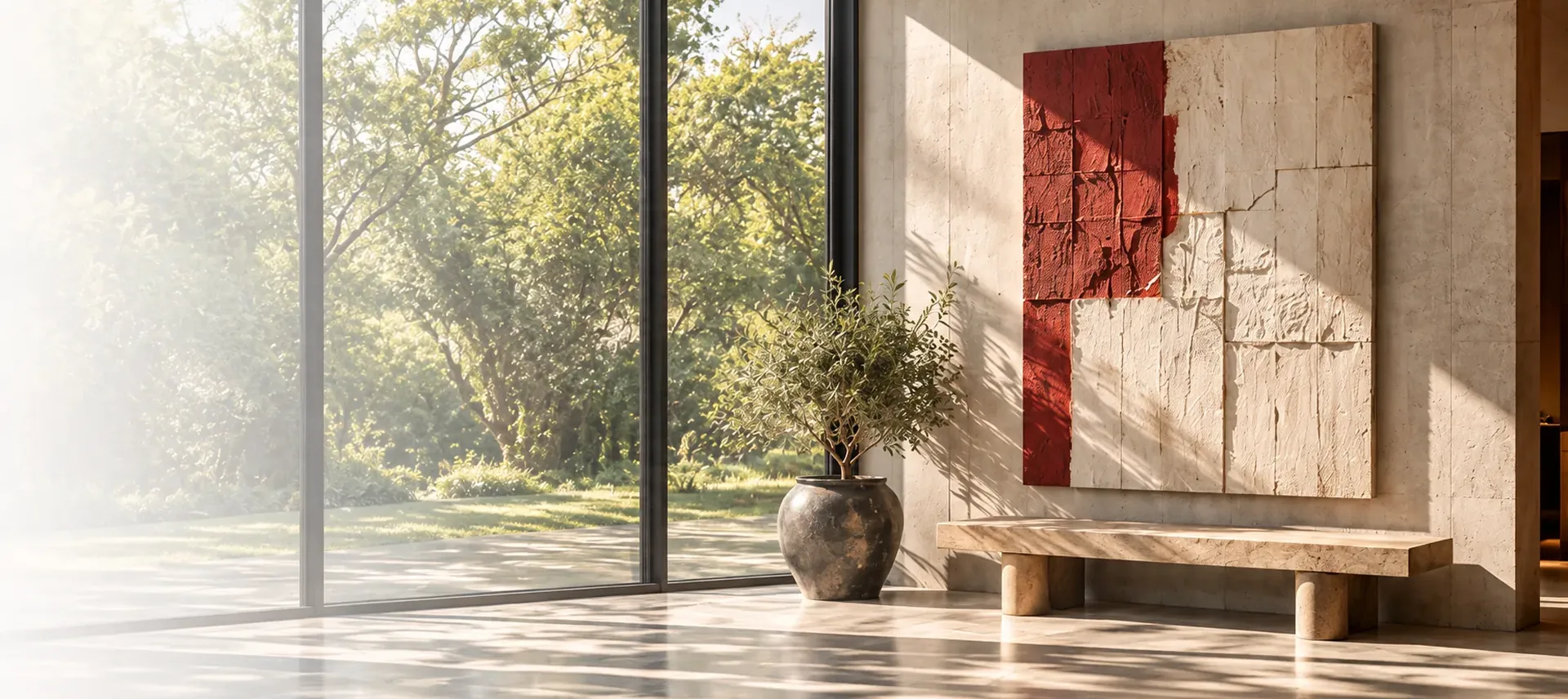
The commonest mistake in lobbies is timidity. A small picture on a large wall looks like an apology. If the architecture is generous, the art needs to meet it, whether through a large single work, a deliberately arranged group or a piece that engages the full height of a space.
The second commonest mistake is excess. A lobby crowded with competing objects reads as noise. Empty wall is not wasted wall. It is the silence that lets a strong work be heard.
Light and viewing distance
Work out where people actually stand and walk, then design for that. A piece meant to be seen from across a double-height hall needs different qualities from one seen from a sofa at arm’s length. Details that delight at close range can vanish at distance, and the reverse is also true.
Lighting deserves its own conversation with the designer. Natural light changes through the day, and glare from large windows can ruin a surface. Controlled, adjustable lighting, aimed to avoid reflection on glazing, makes the same work look considerably better. Protect pieces from direct sun that would damage them over time.
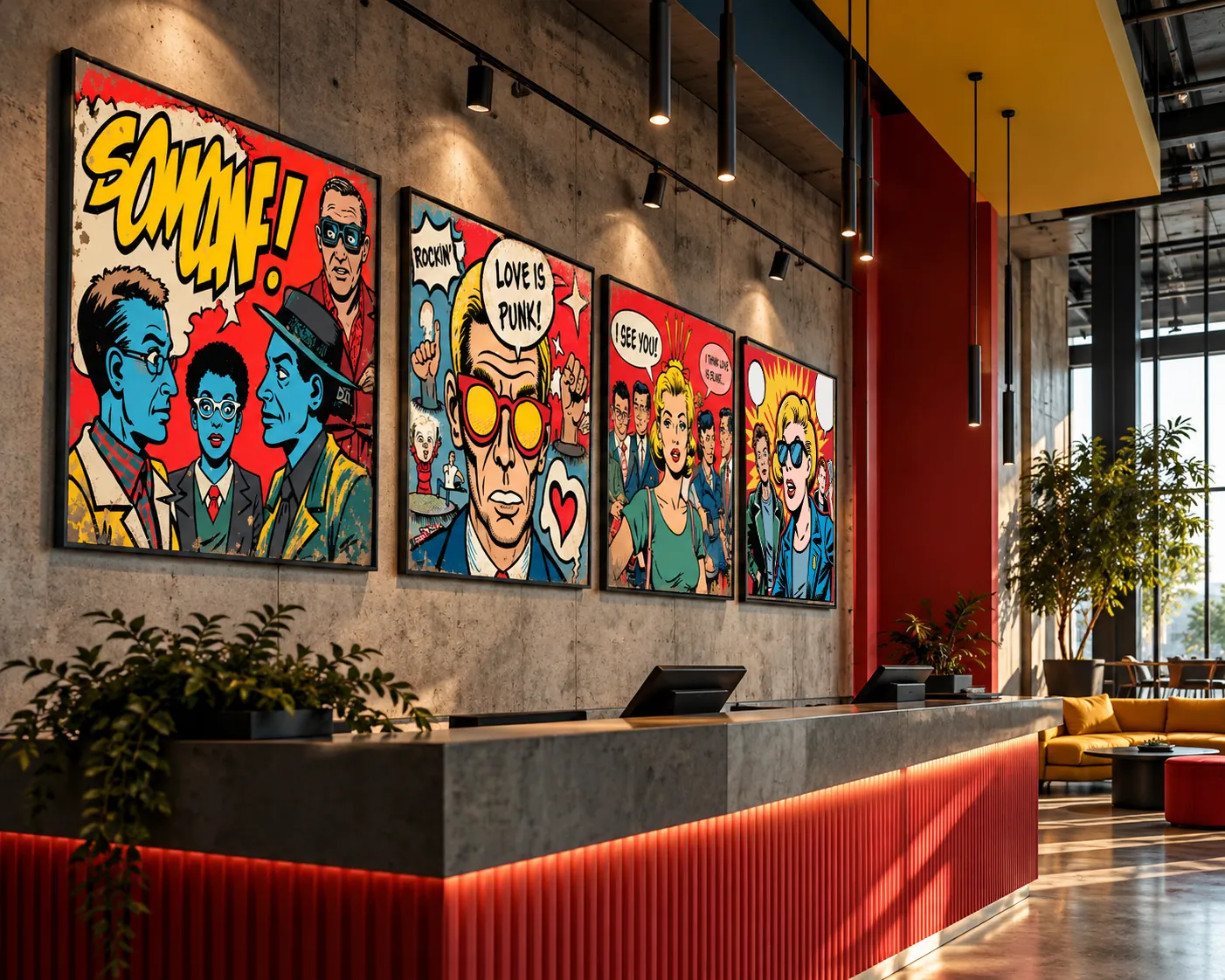
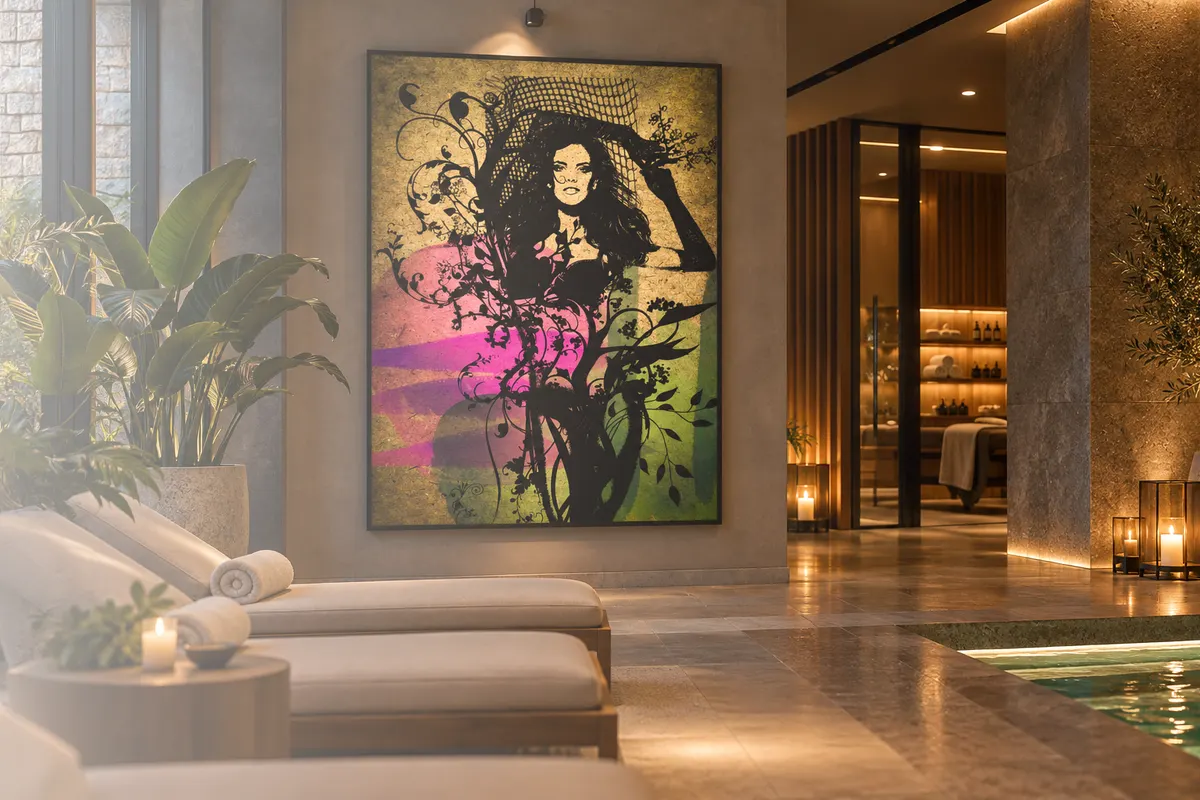
A bold installation can establish the lobby's identity at first sight. Editorial visualisation featuring real artwork by Dan St. Andrei.
A lobby that changes
A lobby does not have to stay fixed. Some properties treat part of the space as a rotating program: new works installed every season, a series that moves through the building, a feature wall that changes with the year. The advantage is that returning guests, and the local people who drop in, find something fresh. The practical requirement is a wall, a lighting system and a hanging method designed from the start to make changes easy and safe.
Editions work well here. A property can hold a selection of numbered works and rotate them, giving the lobby variety without the cost of new commissions every time.
Tell people what they are looking at
A short label beside each work, giving the artist, title, materials and a sentence of context, changes how guests behave. They stop longer. They ask questions. They photograph the label as well as the piece.
Staff matter as much. Reception teams who can say two sentences about the work on the wall turn a decorative feature into a conversation. A small printed or digital guide to the collection extends this to the rest of the building.
Public space, public responsibility
A lobby is open to everyone who walks in: guests, delivery staff, children, people who simply want a coffee. Choose work with that in mind. It does not need to be bland, but it should be able to hold the attention of a varied audience without alienating it. The most successful lobby collections tend to be confident and generous, offering something to people who know art and something else to those who do not.
Safety and security are part of the design too. Fixings, plinths for any sculpture, clearances around works and protection from accidental contact should be settled early.
A measure of success
You will know a lobby is working when people photograph it, when staff mention the art unprompted, and when regular visitors have a favorite piece. None of that can be forced. It comes from choices made carefully, one at a time, by people who understood the room.
At Conceptiones, we develop and produce art for hospitality, interior design and architecture, including the entrance spaces that set the tone for everything else. If a lobby is on your drawing board, we would like to hear what you have in mind.
Frequently asked questions
How large should art in a hotel lobby be?
It should meet the architecture. In a generous space, that means a large single work, a deliberately arranged group, or a piece that engages the full height. A small picture on a large wall looks like an apology, while a crowded lobby reads as noise.
How should lobby artwork be lit?
With controlled, adjustable lighting aimed to avoid reflection on glazing, coordinated with the designer. Natural light changes through the day and glare from large windows can ruin a surface, and direct sun can damage pieces over time.
Can a hotel lobby have rotating art?
Yes. A lobby can rotate works each season or move a series through the building, provided the wall, lighting system and hanging method are designed from the start to make changes easy and safe. Numbered editions suit this well.
Why label artworks in public spaces?
A short label with artist, title, materials and context makes guests stop longer and ask questions, and informed staff turn a decorative feature into a conversation.
A hotel-wide artwork programme spanning guest accommodation, shared spaces and the VIP Lounge, including more than 1,600 ceramic works and 24 large-format paintings and museum-quality fine art prints.