How to give two hundred rooms a point of view without repeating yourself
By Dan St. Andrei, Creative Director, Conceptiones · Art in Spaces · 6 min read · Image: Dan St. Andrei
A guest room is the most private space in a property and the one where a guest spends the most unobserved time. They sit on the bed, look at the wall, and form an opinion. What hangs there matters more than its size would suggest.
It is also where art programs most often go wrong. Faced with dozens or hundreds of rooms, owners reach for the safe option: a single image, ordered in bulk, framed identically, hung at the same height. The result is tidy and forgettable. The opposite error is just as common. Every room gets a unique original, the budget disappears by the third floor, and the remaining corridors are bare.
There is a workable path between the two, and it starts with deciding what you are actually trying to do.
Decide what a room needs
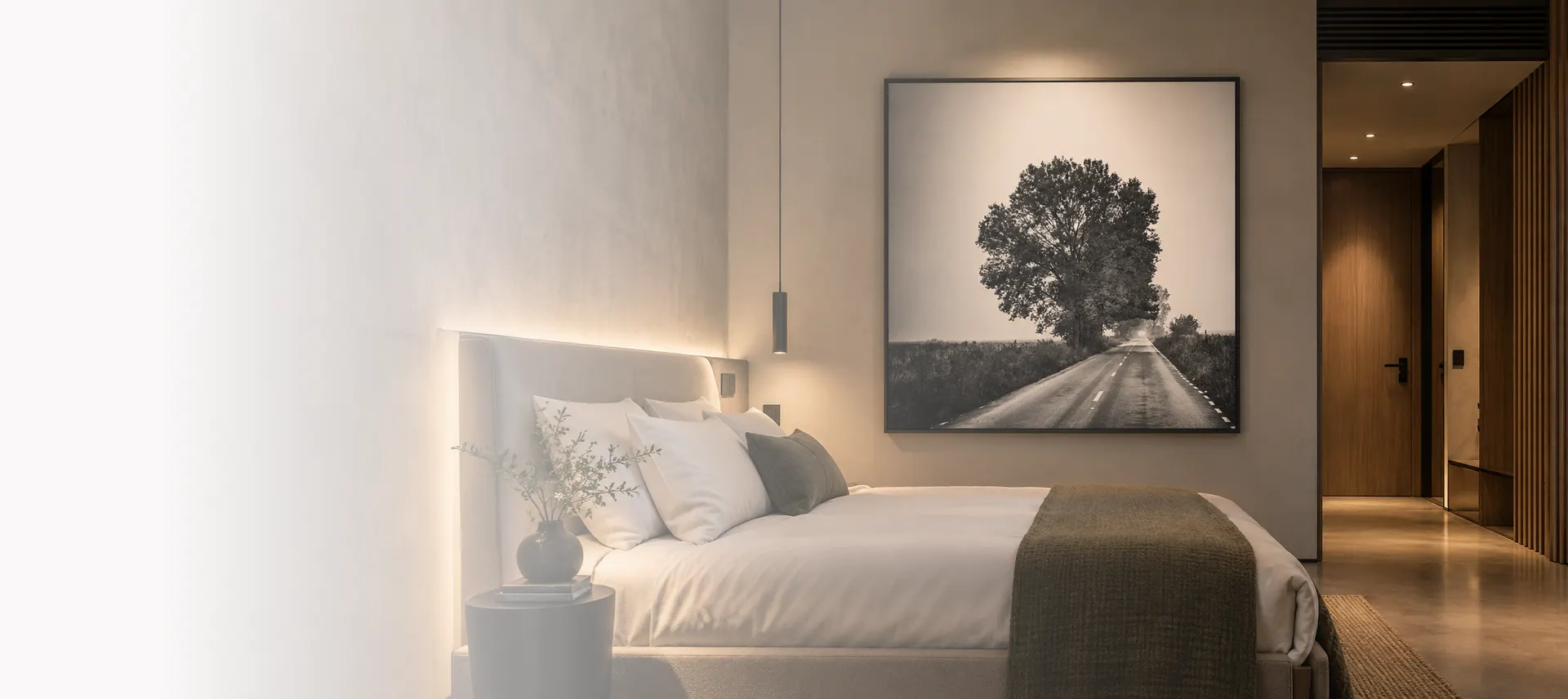
Most guest rooms need a small number of well-placed works, not many. A strong piece above the bed anchors the room. A second, quieter work near the desk or seating area rewards a longer stay. Bathrooms and corridors can take something small and unexpected, or nothing at all.
Resist filling every wall. Rooms that are already carefully lit and furnished tend to look better with fewer, better works than with a gallery arrangement.
The series approach
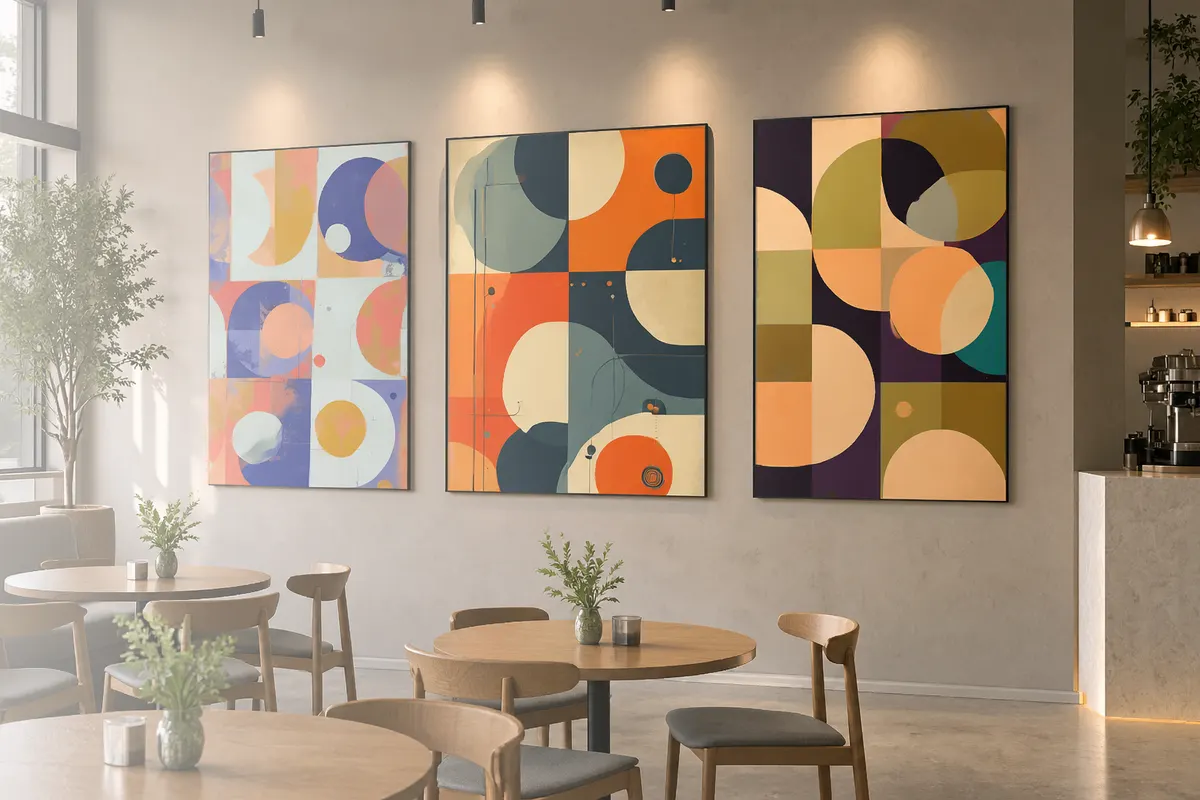
The most effective way to cover many rooms is to think in series. A single body of work, such as a set of photographs, a sequence of drawings or a family of abstract compositions, is divided so that each room receives its own selection. The rooms feel related without being identical, and a guest who stays twice, or moves to a different floor, finds something new within a language they already recognize.
Series also solve a practical problem. When the works come from one artist or a tightly chosen group, color, scale and finish stay consistent, which makes installation and quality control far simpler.
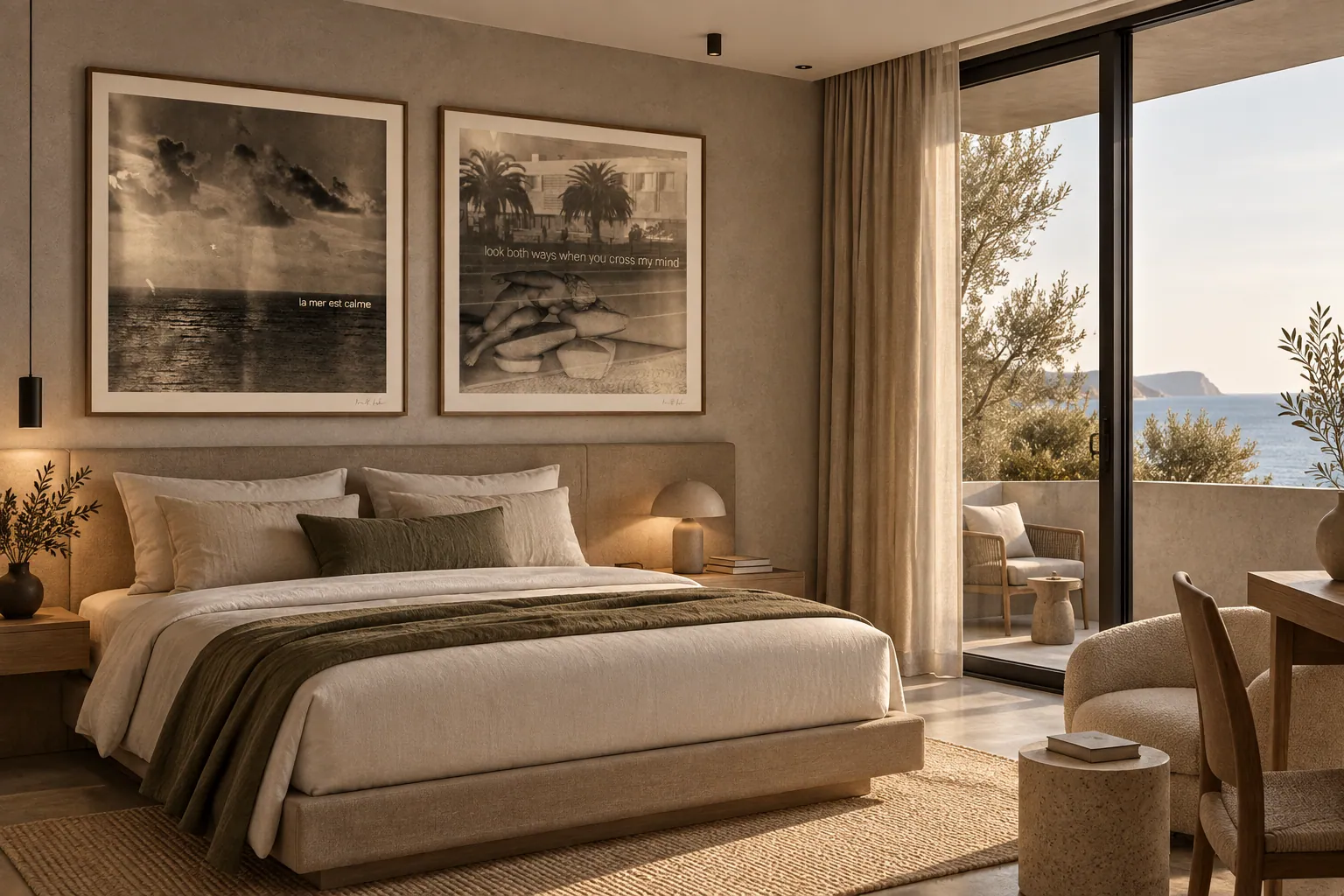
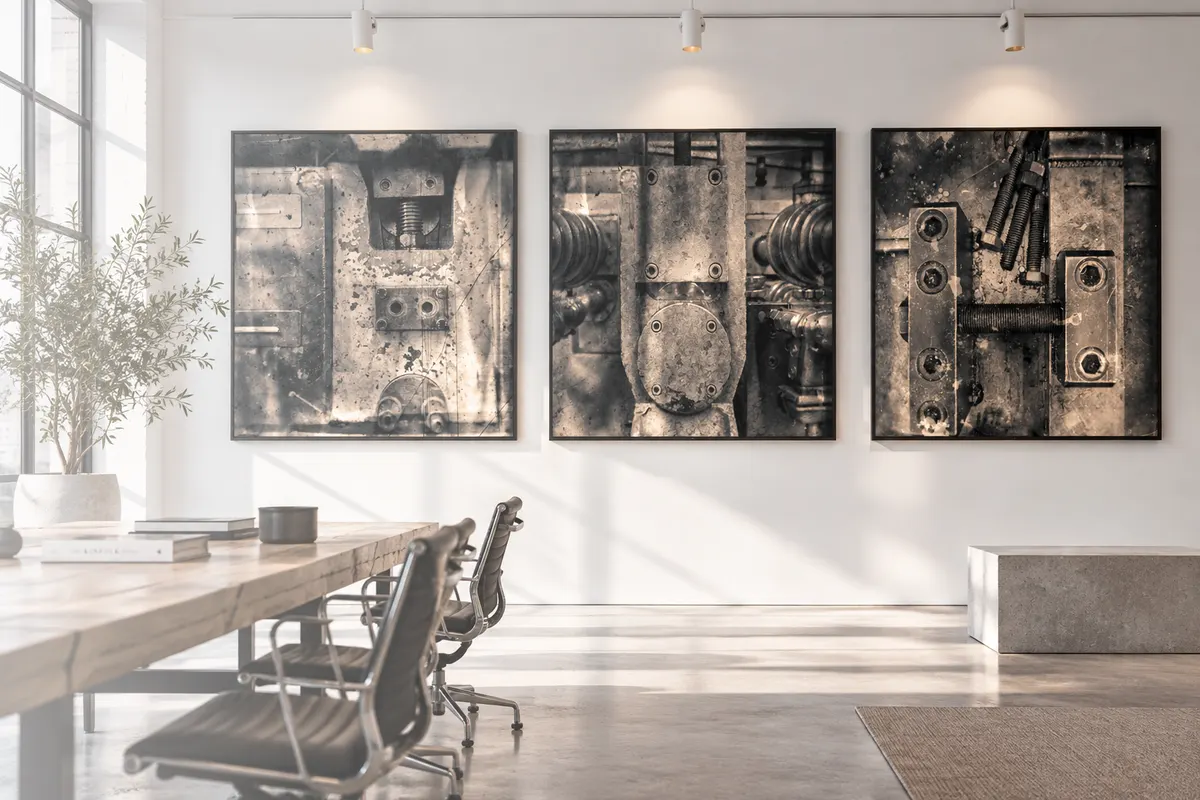
A coordinated pair gives a guest room character without visual noise. Editorial visualisation featuring real artwork by Dan St. Andrei.
Where editions earn their place
Limited editions are particularly well suited to guest rooms. A numbered edition of museum-quality prints lets a property place real work by a real artist in every room, at a cost that unique pieces could not match, while keeping each work signed, documented and traceable. Variation can come from using different images from the same artist, different formats, or different edition numbers, so that no two rooms are quite alike.
Reserve unique works for the places where guests gather: reception, restaurant, lounge, suites, key corridors. The combination of a few originals and a well-managed edition program usually gives the strongest result for the money.
Build for durability
Guest rooms are hard on objects. Luggage swings, housekeeping cleans, and people lean on walls without thinking. Plan for it.
Use glazing that tolerates cleaning, and consider acrylic where weight or breakage is a concern.
Specify frames with a finish that resists marking.
Fix works securely, with hardware appropriate to a public environment.
Choose hanging heights and positions that keep pieces out of the way of furniture and luggage.
Check with the project team that materials meet any fire and safety requirements that apply.
A beautiful piece that is damaged within a year is not good value, however small the cost.
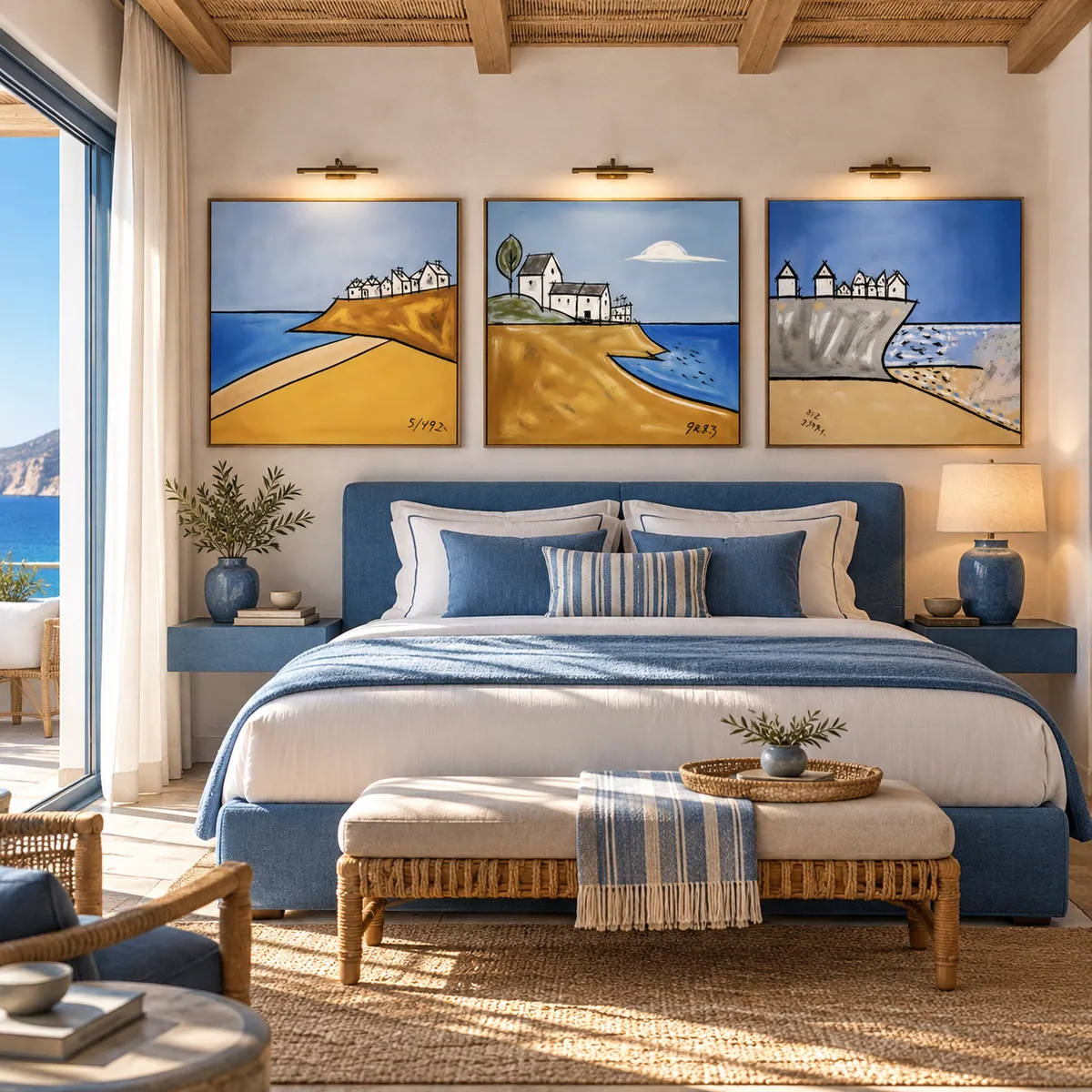
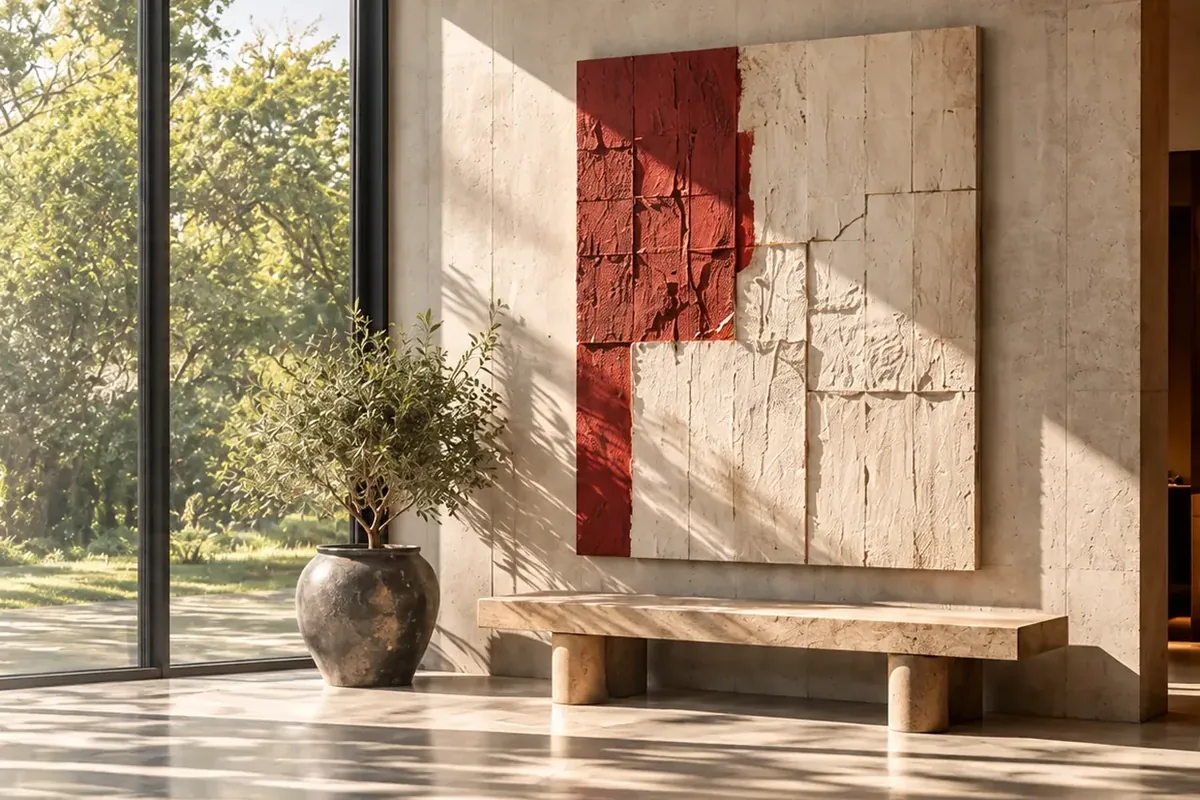
A repeatable series can connect many rooms while preserving variety. Editorial visualisation featuring real artwork by Dan St. Andrei.
Local character, room by room
Because there are so many rooms, they are a good place to express where the property is. A series can draw on regional landscape, on local crafts, on the colors found outside the window. Guests see it from the pillow, which makes it an unusually effective way to tell them where they are.
If the program involves several artists, consider assigning a theme or a floor to each. It gives the building a rhythm and gives staff something specific to talk about.
Logistics decide the outcome
Large programs are won or lost on organization. Every work needs a number, a location, a record and a destination. Production should be staged so that approved samples exist before the full run begins, and delivery should be sequenced to follow the installation plan, floor by floor.
Leave time for the unexpected. A room that is not yet painted, a delivery that arrives early, a change of layout: each is manageable if someone is tracking it, and expensive if nobody is.
Keep a record
A schedule that lists each room, each work, its edition number, materials and condition at handover is not paperwork for its own sake. It is what allows a property to replace a damaged piece correctly three years later, insure its collection accurately, and understand what it owns.
At Conceptiones, we develop and produce art for hospitality, interior design and architecture, including programs that run across many rooms. If you are planning one, we would be glad to talk through how it could be structured.
Frequently asked questions
How much art does a hotel guest room need?
Usually a small number of well-placed works: a strong piece above the bed and a quieter one near the desk or seating area. Bathrooms and corridors can take something small, or nothing.
How can a large hotel afford original art in every room?
By using a series divided among rooms and limited editions of museum-quality prints for the rooms, while reserving unique works for places where guests gather such as reception, restaurant, lounge and key corridors.
What should be considered for the durability of art in guest rooms?
Glazing that tolerates cleaning, frame finishes that resist marking, secure fixings suitable for a public environment, hanging positions clear of furniture and luggage, and materials that meet applicable fire and safety requirements.
Why keep a room-by-room record of artworks?
A schedule listing each room, work, edition number, materials and condition at handover lets a property replace damaged pieces correctly, insure the collection accurately and understand what it owns.
A hotel-wide artwork programme spanning guest accommodation, shared spaces and the VIP Lounge, including more than 1,600 ceramic works and 24 large-format paintings and museum-quality fine art prints.