Hotel Artwork Materials and Framing: What Lasts in Use
Why the physical quality of art decides how it looks, lasts and feels in a hospitality space
By Dan St. Andrei, Creative Director, Conceptiones · Materials & Making · 6 min read · Image: Dan St. Andrei
On a screen, two versions of the same image can look identical. On a wall, in a corridor lit from one side, touched by guests and cleaned by housekeeping, they will not. Materials are where art meets reality, and in hospitality that reality is demanding: constant light, changing humidity, heavy footfall and a standard of finish that guests notice even when they cannot say why.
This article looks at the choices behind well-made art for interiors, from substrate to frame to installation, and the reasoning that should guide them.
Start with the setting, not the catalog
The right material depends on where the work will live. A suite, a restaurant, a spa corridor and a conference foyer each present a different set of conditions.
Before choosing anything, a good maker asks:
How much natural and artificial light will the piece receive?
Is the space humid, as in a spa or near a pool, or dry and air-conditioned?
Will guests be able to touch the work, brush past it or lean against it?
How will it be cleaned, and by whom?
Are there regulations to respect, such as fire-performance requirements for materials in public areas?
The answers shape every decision that follows.
Surfaces: paper, canvas and beyond
Fine-art paper. Archival, acid-free papers, whether smooth, textured or cotton-based, give photographs, drawings and graphic works depth and a tactile quality that coated commodity papers cannot match. They are the standard for museum-grade prints, and with proper framing they perform very well in interiors.
Canvas. Stretched canvas suits painterly work and larger formats. Quality depends on the weave, the stretcher construction and the finishing, as well as on how well the edges are handled.
Rigid substrates. For high-traffic or large-scale pieces, work can be mounted on aluminum, composite or other stable supports. This provides flatness and durability, with the trade-off of a different visual character that should suit the artwork.
Specialist surfaces. Glass, metal, ceramic and textile open further possibilities for bespoke commissions, with their own production methods and lead times.
None of these is better in the abstract. The best choice is the one that serves the image, the space and the maintenance reality of the property.
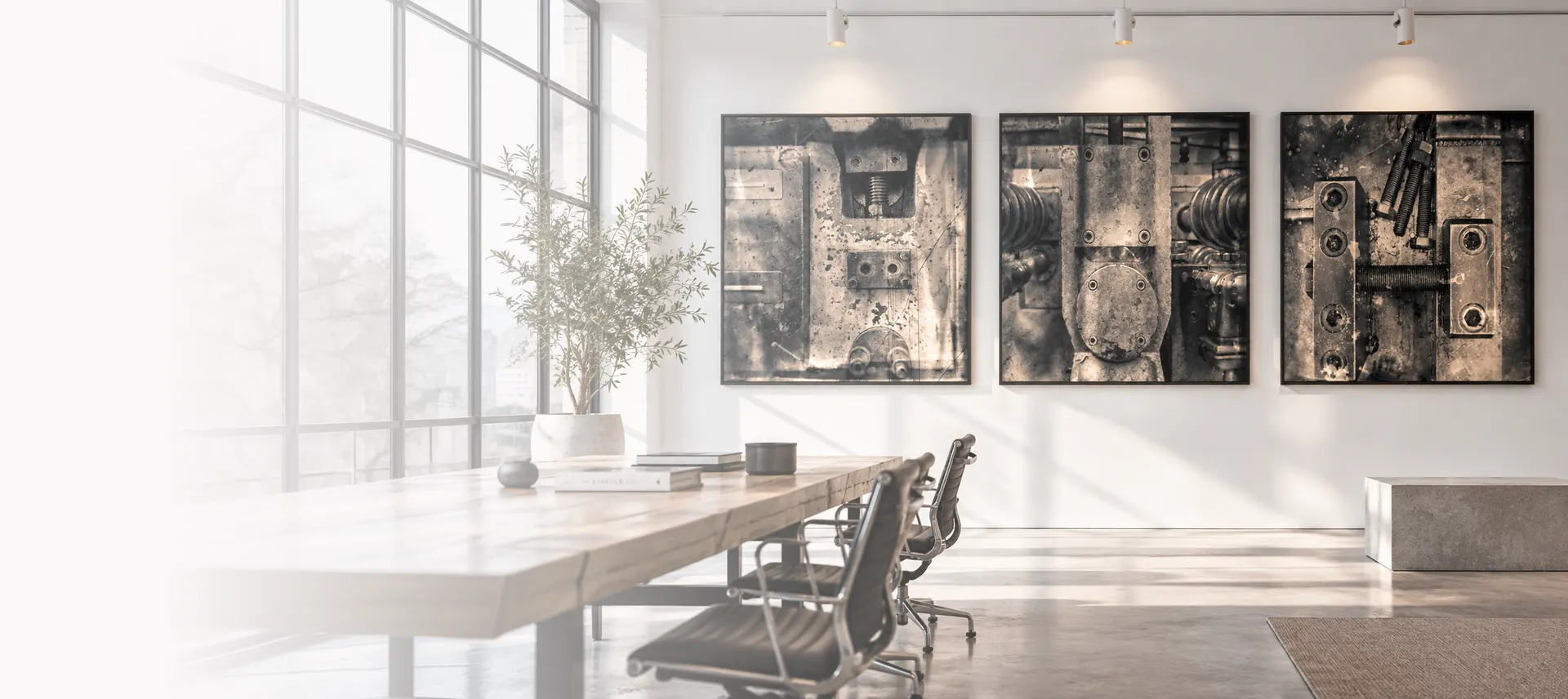
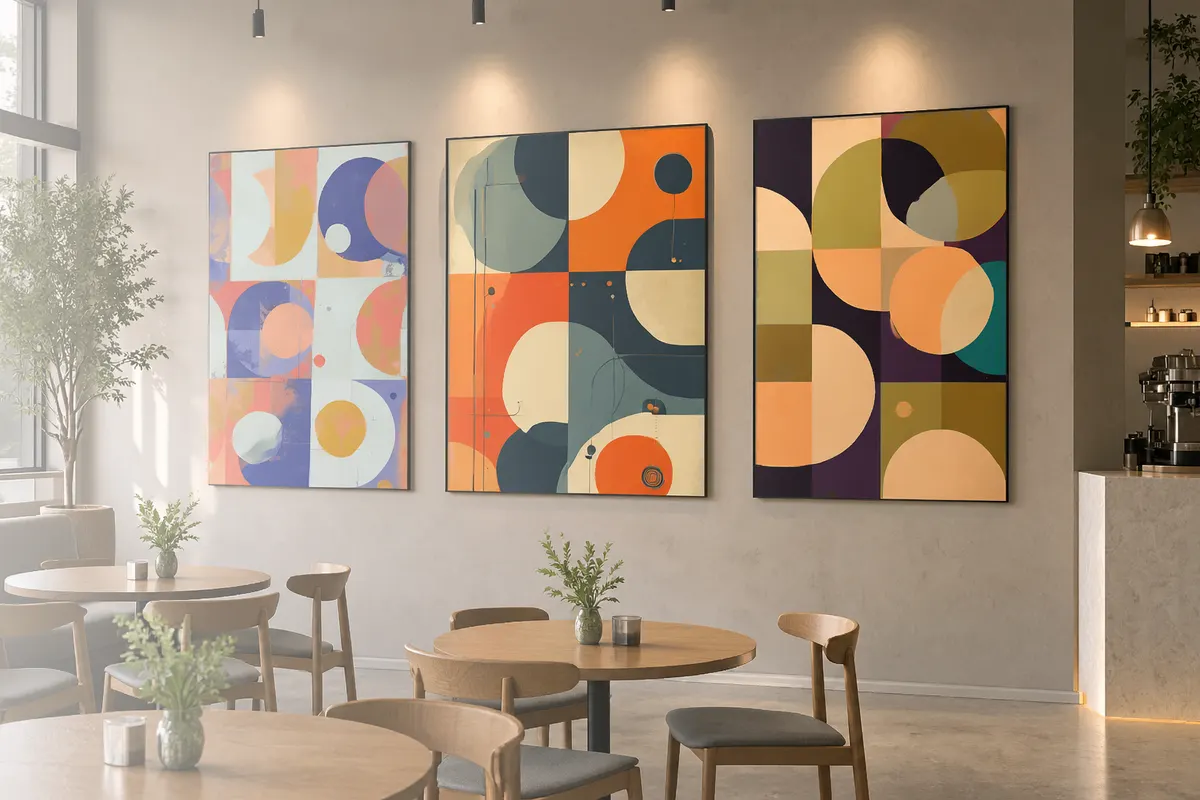
Frame, glazing, wall surface and nearby materials all affect how an artwork is perceived. Editorial visualisation featuring real artwork by Dan St. Andrei.
Materials that belong to the place
Some of the most convincing interiors choose materials that speak of their surroundings. Natural fibers, clay, wood, stone, handmade paper and textile can echo the textures and colors of the landscape, or the traditions of regional craft, without turning into pastiche. Handmade details, such as a ceramic piece, a woven work or a hand-finished frame, add warmth and a human scale that machine-made objects rarely achieve.
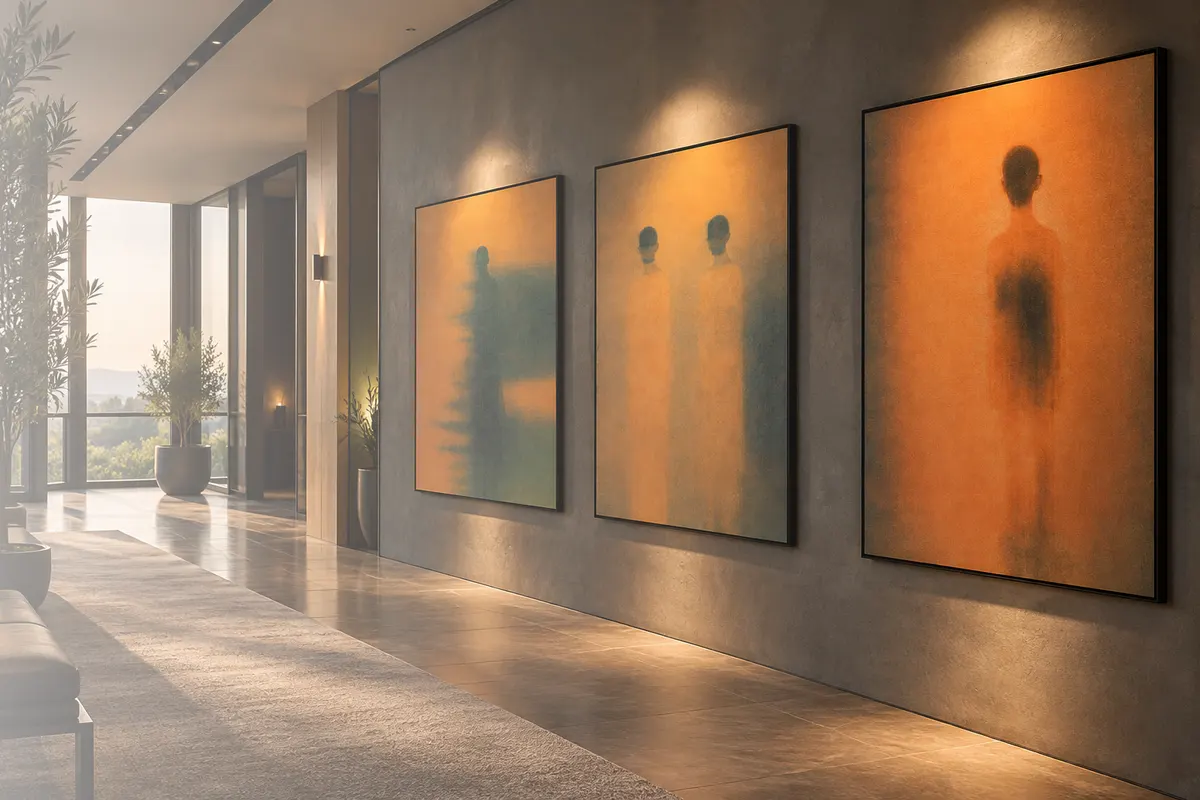
Light is part of this conversation. A work seen in morning sun, afternoon glare and evening lamplight will change, and the right materials make those changes beautiful instead of damaging. Matte surfaces, subtle textures and well-chosen glazing allow art to live with the daylight of a place and its seasons.
Inks, pigments and permanence
For printed work, the ink system matters as much as the paper. Pigment-based inks, produced for fine-art use, offer a wide tonal range and strong resistance to fading when paired with suitable media. Combined with proper framing and sensible placement away from direct sun, they allow a print to keep its character for decades.
Color management is the quiet discipline behind this. A faithful print comes from calibrated equipment, careful proofing and a maker who compares the result against the original, not against a file on a monitor. For artists whose work depends on subtle shadows, grain or the texture of a brushstroke, this step cannot be skipped.
Framing and protection
Framing is where a print becomes an object that belongs in the room. It also determines how well the work survives.
Glazing. Glass or acrylic with UV filtering protects against light damage. Anti-reflective options help in bright spaces. Acrylic is lighter and safer in busy public areas, while glass can offer a crisper surface in controlled settings.
Mounting and matting. Archival, acid-free materials keep the artwork stable and prevent discoloration over time.
Frame profile and finish. Proportion, depth and color should support the work and the architecture, not compete with either. A consistent frame language across many rooms can unify a collection.
Backing and sealing. Properly sealed backs keep out dust and moisture, particularly important in humid or coastal environments.
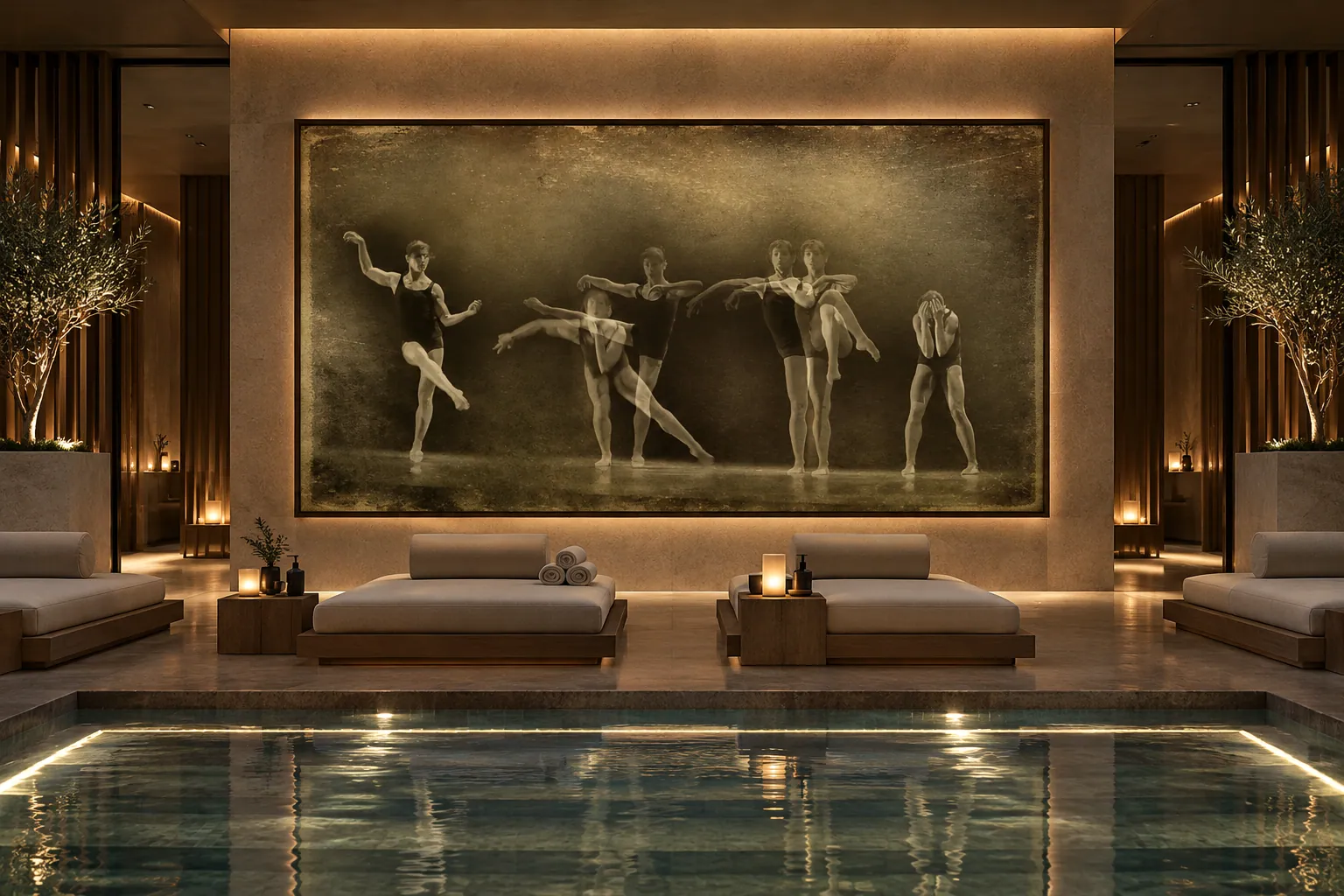
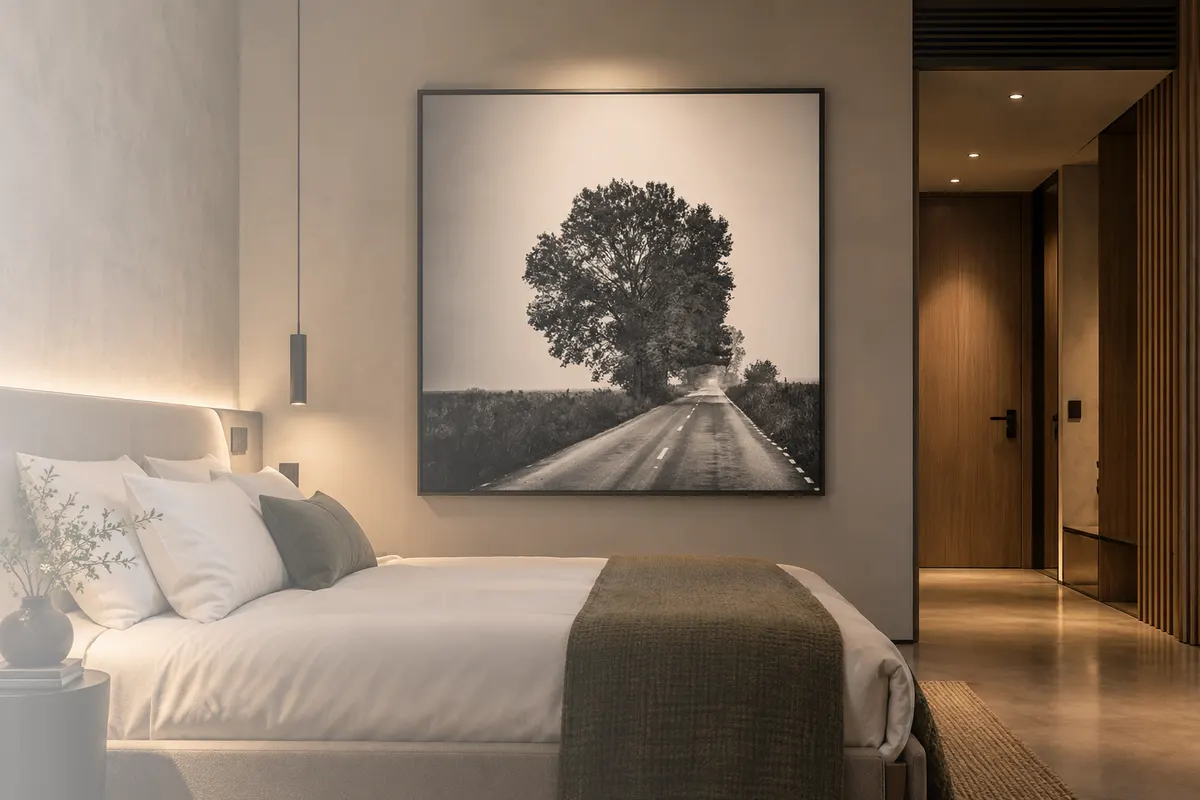
Hospitality conditions influence substrate, protection, framing and installation choices. Editorial visualisation featuring real artwork by Dan St. Andrei.
Installation is part of the making
Even the best-made piece can be undermined by poor installation. Weight, wall construction, fixings, spacing and eye level all need to be planned. In hospitality, security fixings are often appropriate for guest-facing areas, and lighting should be coordinated with the designer so that works are seen as intended.
A professional installation is quiet: levels are exact, hardware is invisible and nothing needs to be corrected after opening.
Editions, originals and consistency
Materials also play a role in how a collection is built. Original paintings and unique pieces bring singularity to key locations. Limited-edition prints, produced to the same standards, make it possible to carry quality and consistency throughout a property while keeping each work numbered, signed and documented. Using the same materials and finishing across a series gives a project a clear visual identity, without making it repetitive.
What guests notice
Most guests will never ask what paper was used or how a frame was constructed. They will, however, register the result: a surface that feels considered, colors that feel true, details that hold up on closer inspection. Over a stay of several days, those impressions add up to a sense that the property takes care of things.
That sense is hard to manufacture and easy to lose. It is built, piece by piece, in the making.
At Conceptiones, we develop and produce art for hospitality, interior design and architecture, with material choices made around the work, the space and the people who will live with it. If you are planning a project and want to discuss what is possible, we would be glad to hear from you.
Frequently asked questions
Should hotel artwork be framed in glass or acrylic?
Both work with UV filtering. Acrylic is lighter and safer in busy public areas, while glass can offer a crisper surface in controlled settings. Anti-reflective options help in bright spaces.
What makes a fine-art print last?
Archival acid-free paper, fine-art pigment-based inks, UV-filtering glazing, archival mounting, a sealed back, and placement away from direct sun. Together they allow a print to keep its character for decades.
What should be considered before choosing materials for a hospitality space?
The light the work will receive, humidity, whether guests can touch it, how it will be cleaned, and any regulations such as fire-performance requirements for materials in public areas.
Why does installation matter for artwork?
Weight, wall construction, fixings, spacing, eye level and lighting all affect how a work is seen and how safe it is. In guest-facing areas, security fixings are often appropriate.
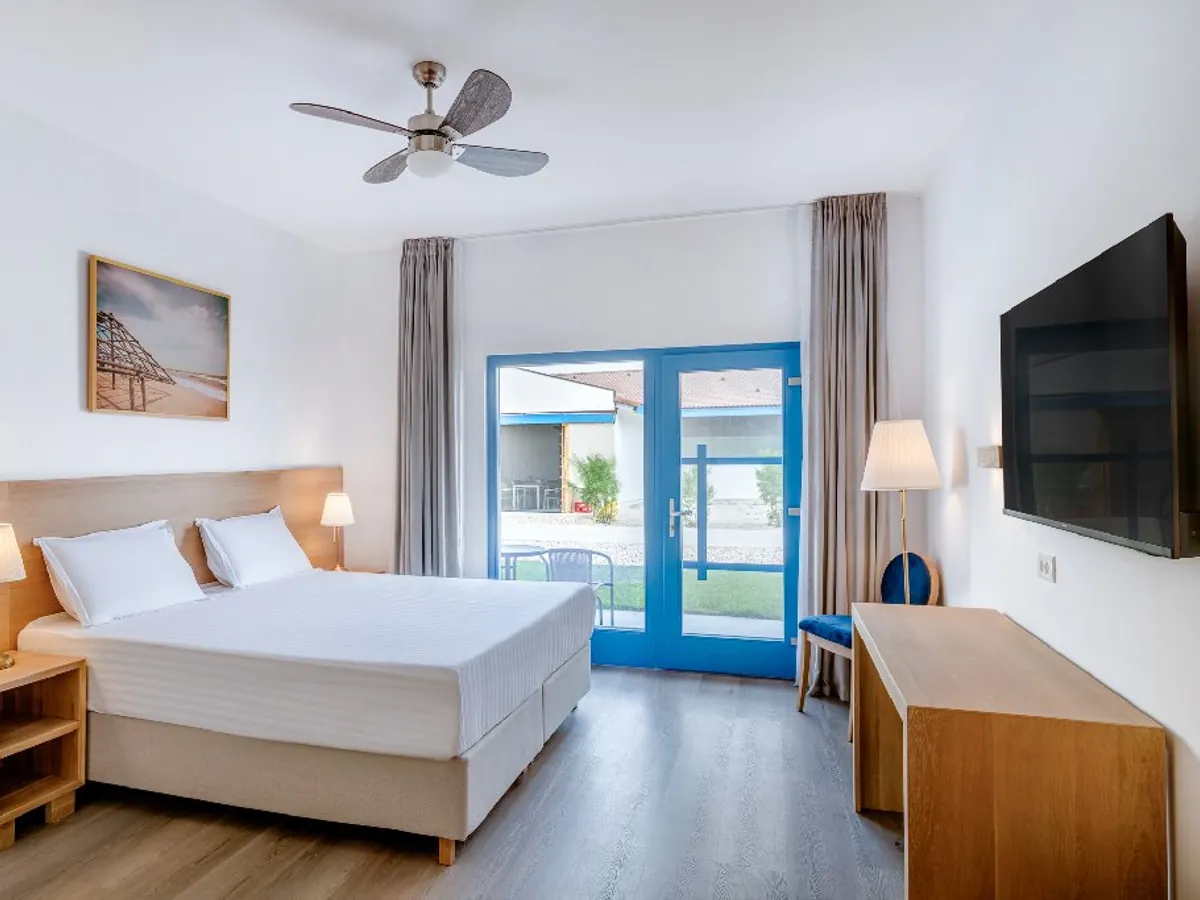
A collection of 240 framed art photographs created from a dedicated one-week shoot in the surrounding coastal landscape—bringing the identity of the place into the guestrooms and turning the hotel into an accessible gallery for its visitors.