The Hospitality Art Program Process: Brief to Installation
How an art program moves from first brief to final installation
By Dan St. Andrei, Creative Director, Conceptiones · Projects & Process · 6 min read · Image: Dan St. Andrei
Every hospitality project begins with a feeling: a sense of what the place should be like to arrive in, stay in and remember. The task of an art program is to translate that feeling into walls, rooms and moments, reliably and on schedule. That translation does not happen by luck. It happens through a process that is clear enough to follow and flexible enough to respond to what each project discovers along the way.
This article walks through the stages of a well-structured art project, from the first conversation to the day the work is installed, and explains what each stage is meant to achieve.
1. Brief and context
Everything starts with understanding. What is the building, and who is it for? What is the design concept, and what role should art play in it? What are the budget, the timeline and the opening date? Which spaces matter most?
This is also the moment to study the place itself: its landscape, its history, its craft traditions, the people who live and work nearby. A program rooted in these details gives guests a reason to feel they could be nowhere else, and gives the property a story that is genuinely its own.
At this stage, the most valuable questions are often the simplest. A short, honest brief, supported by plans, mood references and any existing design documents, is worth more than a long wish list.
2. Curatorial direction
With the context clear, the next step is a point of view. A curatorial direction sets out the thread that will run through the program: a region, a theme, a technique, a palette, a group of artists with shared sensibilities.
This is where the project becomes specific. Rather than a collection of attractive pieces, the client sees a coherent proposal: why these works, for these spaces, in this order. It is also where decisions are made about the balance between original works, commissions and limited editions.
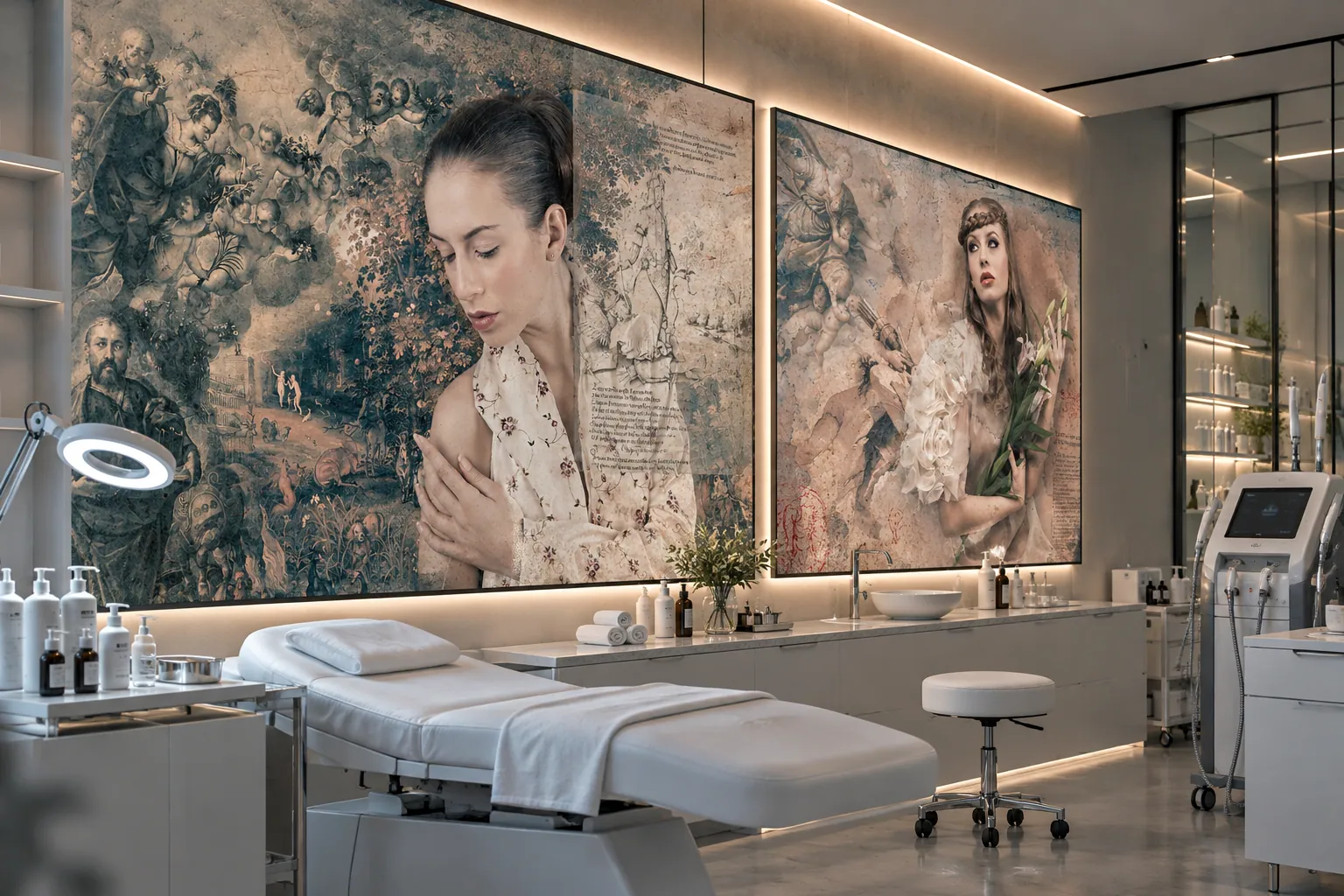
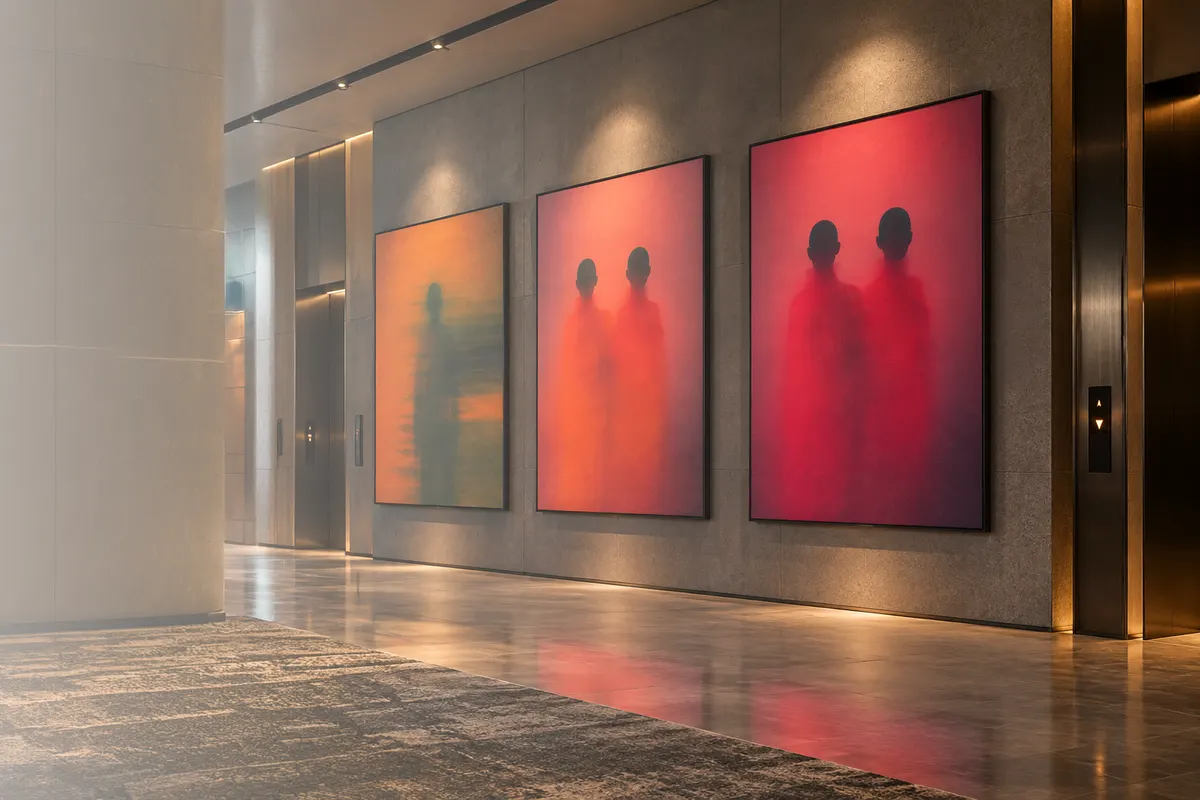
Development decisions connect the proposed work with scale, sightlines and material context. Editorial visualisation featuring real artwork by Dan St. Andrei.
3. Selection and commissioning
Once the direction is agreed, the work is identified. Some pieces will come from existing bodies of work by established or emerging artists. Others will be commissioned for specific locations, with formats, palettes and subjects developed for the architecture.
Good practice here includes presenting options in context, with scaled visualizations or mock-ups, so that clients and designers can judge how each piece will work in the room. It also includes agreeing artist terms, rights and credits in writing before production begins.
4. Development and approval
Between choice and production lies a stage that is easy to underestimate: development. Formats are finalized against drawings. Materials, substrates, framing and glazing are specified. Samples and proofs are prepared and approved. The program is mapped to the rooms and zones of the property, with a schedule that works backward from opening.
Approvals at this stage are what keep production calm. A color corrected in a proof costs minutes; a color corrected on a finished run costs weeks.
5. Production
Production is where care becomes visible. Prints are made on archival materials with calibrated color. Originals are prepared, mounted and framed. Editions are numbered, signed and documented. Each piece is checked against the approved reference before it moves on.
The aim is consistency without uniformity: a collection whose elements clearly belong together while each retains its own character.
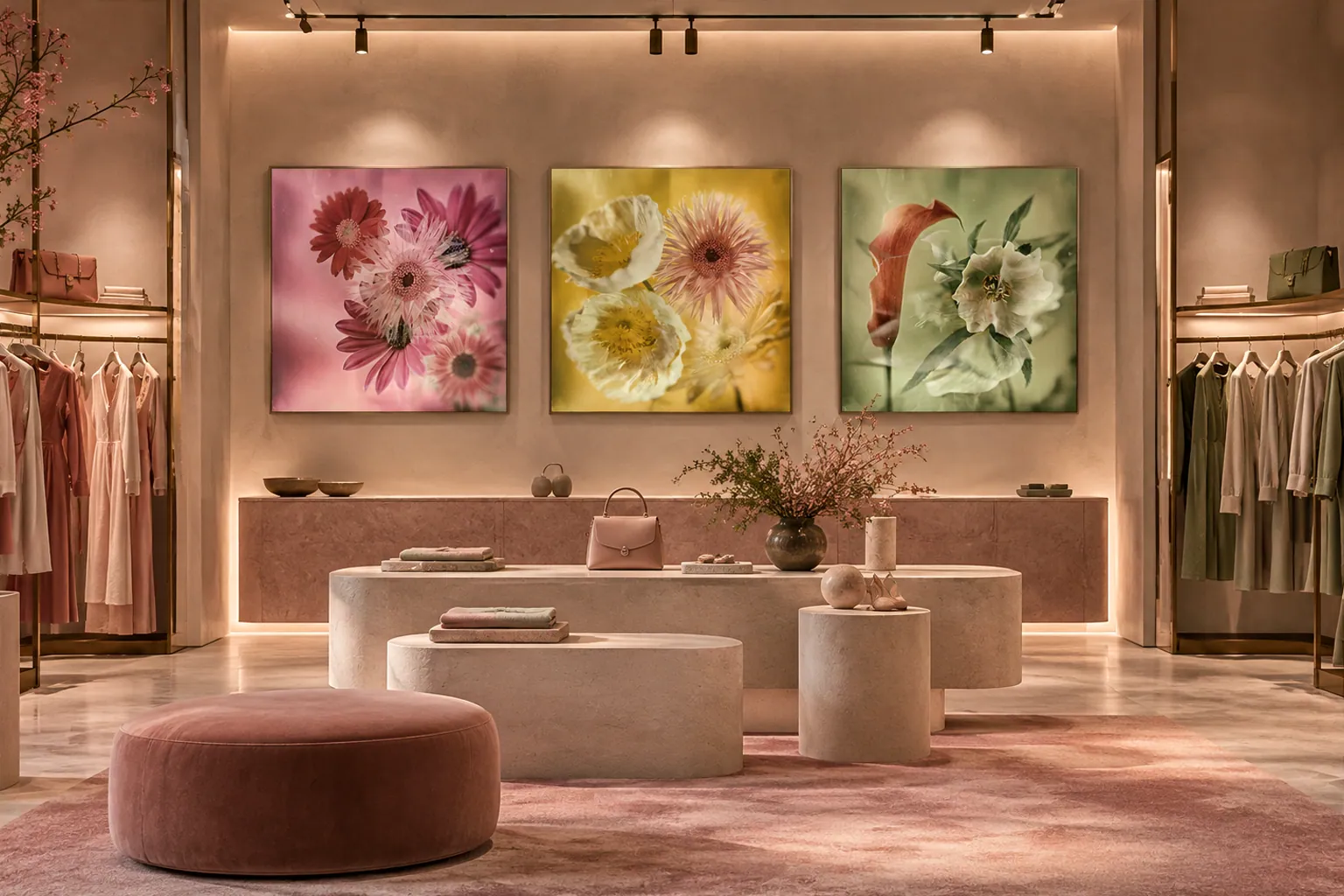
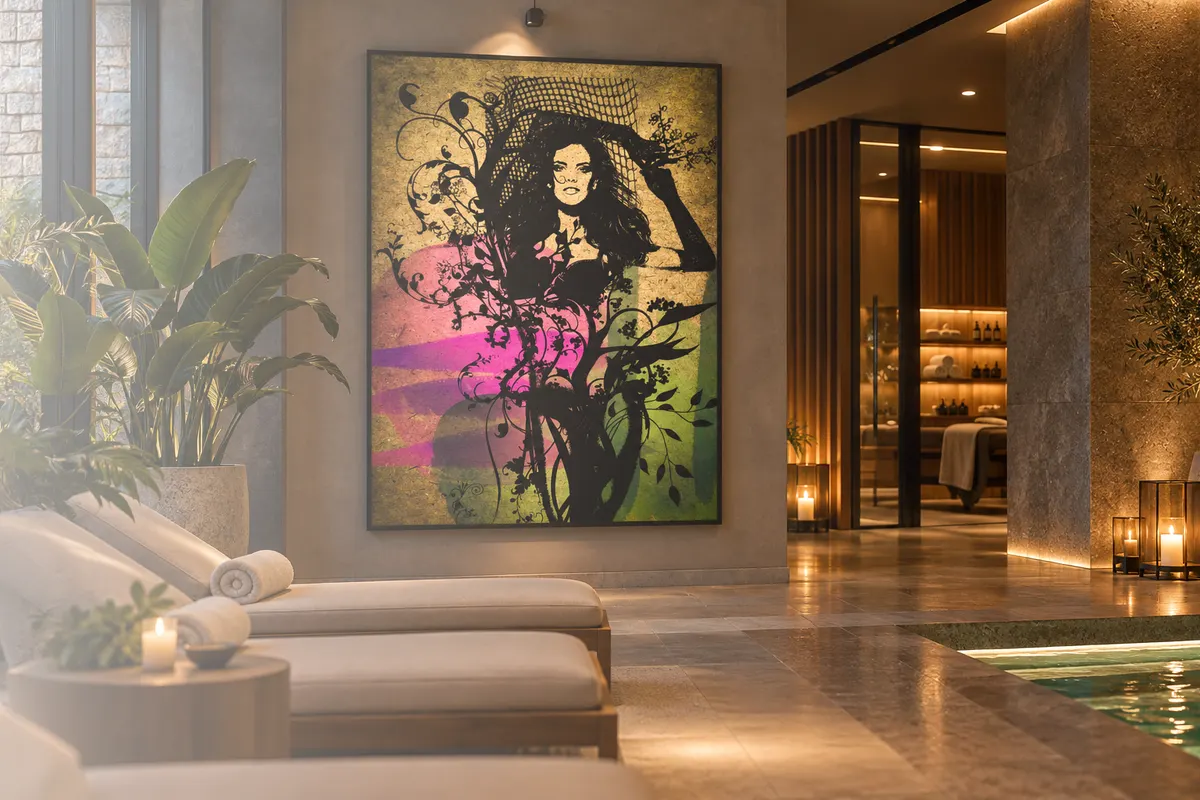
Selection and approval establish how individual works operate as one program. Editorial visualisation featuring real artwork by Dan St. Andrei.
6. Delivery and installation
Works are packed to protect them in transit and delivered in an order that matches the installation plan. On site, placement is carried out to the agreed drawings, with attention to eye level, spacing, fixings and lighting. In guest-facing areas, appropriate security fixings are used.
Installation is coordinated with other trades, because art is easily damaged in the final weeks of a construction schedule. Timing it well, and supervising it closely, avoids problems that cannot be undone.
7. Documentation and aftercare
A project is not finished when the last picture is hung. The property’s team needs a record of what is on its walls: artist, title, medium, dimensions, edition details, materials, care instructions and installation notes. With that in hand, maintenance is simple, insurance is straightforward and future changes can be made with confidence.
Aftercare also includes a conversation about how the collection will be presented: labels, credits, a short guide for guests, and the story that the property’s team can tell about the art. Work that is explained is work that is remembered.
What makes the process work
Across projects of every size, a few principles hold:
Decide early. Art specified at the start is almost always better and less costly than art added at the end.
Keep one line of communication. A single point of contact prevents confusion and delay.
Make decisions visible. Briefs, approvals and changes recorded in writing protect everyone.
Respect the specialists. Consultants, architects, designers, artists and makers each bring something the project needs.
Plan for the long term. The collection will live far longer than the construction program.
From process to place
A good process is invisible to guests. What they experience is the result: a lobby that feels distinctive, a corridor that rewards a second look, a room with a work that seems to belong there. Behind that sense of belonging is a sequence of careful steps taken by people who understood both the art and the project.
At Conceptiones, we develop and produce art for hospitality, interior design and architecture, accompanying each project from brief to installation. If you are planning a hotel, a restaurant or any space where art should play a real part, we invite you to start with the Discuss a Project page and tell us what you are building.
Frequently asked questions
What are the stages of a hospitality art project?
Brief and context, curatorial direction, selection and commissioning, development and approval, production, delivery and installation, and documentation and aftercare.
Why are proofs and approvals important?
Because a color corrected in a proof costs minutes, while a color corrected on a finished production run costs weeks.
When should art be installed in a construction schedule?
Installation should be coordinated with other trades and timed carefully, because art is easily damaged in the final weeks of a construction schedule.
What documentation should a property receive at handover?
A record of artist, title, medium, dimensions, edition details, materials, care instructions and installation notes, plus labels, credits and a short guide for guests.
A hotel-wide artwork programme spanning guest accommodation, shared spaces and the VIP Lounge, including more than 1,600 ceramic works and 24 large-format paintings and museum-quality fine art prints.