Choosing an Art Production Partner for a Hospitality Project
What art consultants, architects and hospitality teams should expect from an art partner
By Dan St. Andrei, Creative Director, Conceptiones · Professional Practice · 6 min read · Image: Dan St. Andrei
Choosing art for a hospitality project is rarely a single decision. It is dozens of decisions, made over months, by several people with different priorities: an owner thinking about identity, a designer protecting a concept, a consultant managing a budget, a contractor counting days until opening. In that environment, the quality of the art matters, but so does the quality of the partner behind it.
A beautiful work that arrives late, in the wrong size, without documentation, is a problem. A slightly less spectacular one that arrives exactly as agreed is a project delivered. This article sets out what professional practice in art development and production should look like, and the questions worth asking any partner before work begins.
Art is a deliverable, not an afterthought
On a well-run project, art has a place in the schedule, a line in the budget and a named person responsible for it. It is specified early, alongside joinery and lighting, rather than discovered in the final weeks when walls are already finished and budgets are already spent.
A professional partner will encourage this. They will ask about the building, the guest profile, the opening date and the existing design language before they show a single image. They will treat the brief as the starting point for a curatorial direction, not as a shopping list.
Five marks of a professional art partner
1. A clear scope. What is included, what is not, and who decides what. Scope should cover selection or commissioning, production, framing, delivery, installation and documentation, with any exclusions stated plainly.
2. Transparent budgets. Costs should be broken down by artwork, production, framing, logistics and installation, so that a consultant or designer can compare options and adjust without guesswork. Surprises belong in art, not in invoices.
3. Realistic timelines. Original work and fine-art production take time. Proofing, approvals, curing, framing and transport each have their own lead time. A serious partner builds these into a schedule backward from the opening date and flags risks as soon as they appear.
4. Rights and permissions handled properly. Reproduction rights, artist agreements, credits and the right to publish images of the finished project should be settled in writing before production, not after. This protects the artist, the client and everyone in between.
5. Documentation that lasts. Each piece should leave the project with a record: artist, title, medium, dimensions, edition details where relevant, production specifications, care instructions and installation notes. Years later, the property’s team should be able to answer any question about what is on their walls.
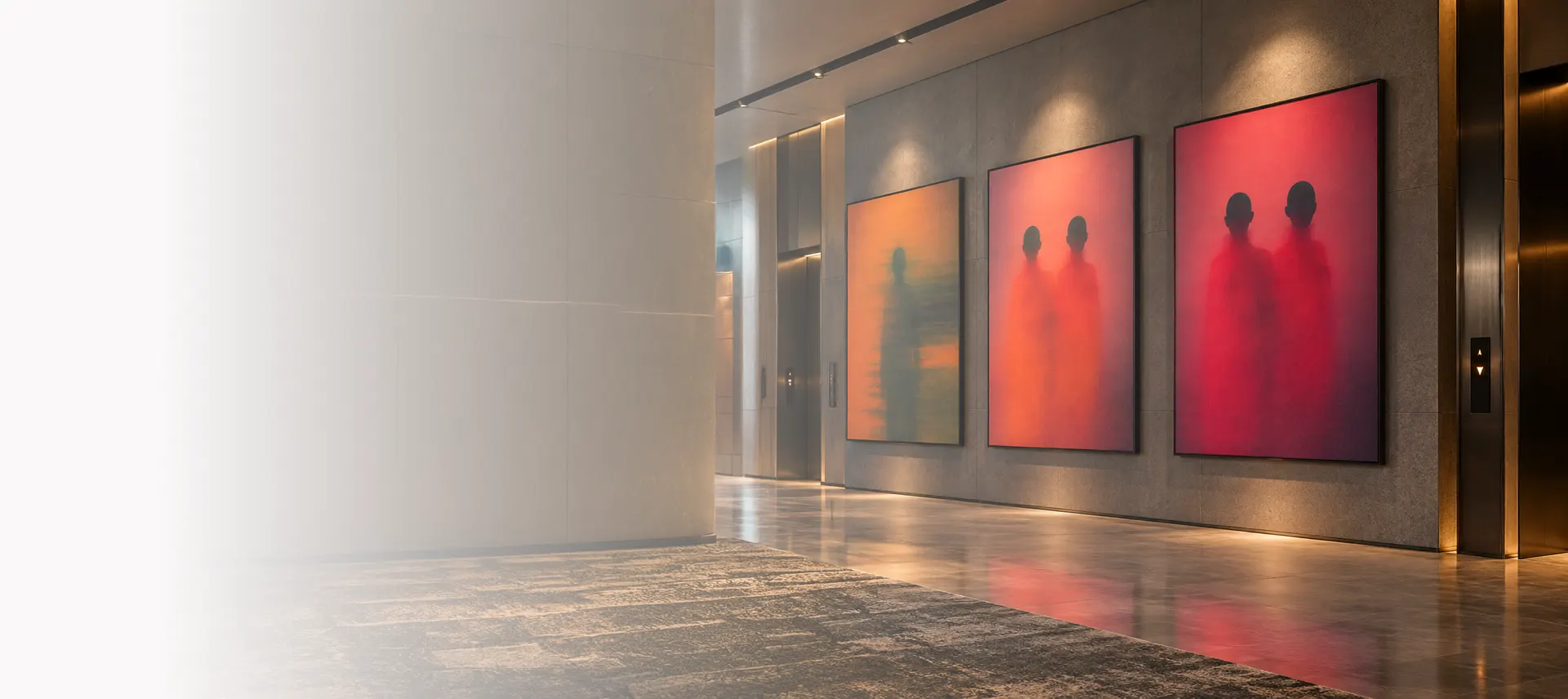
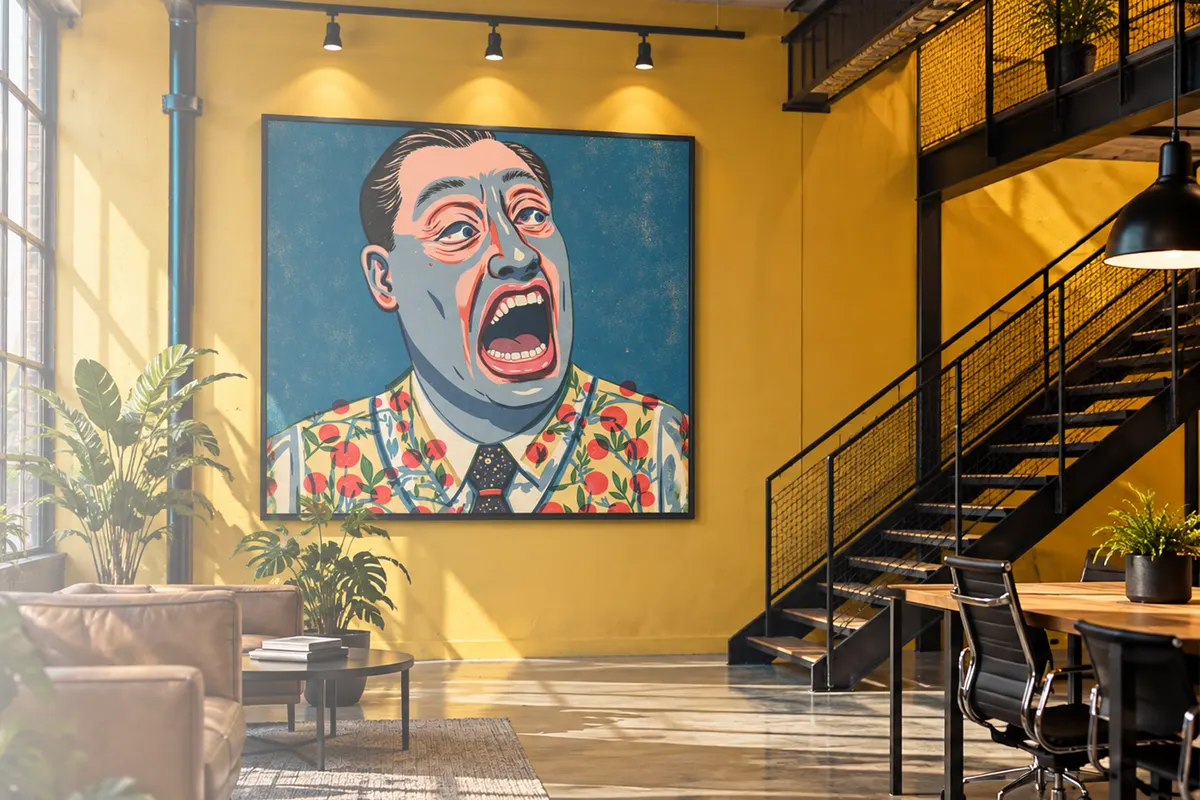
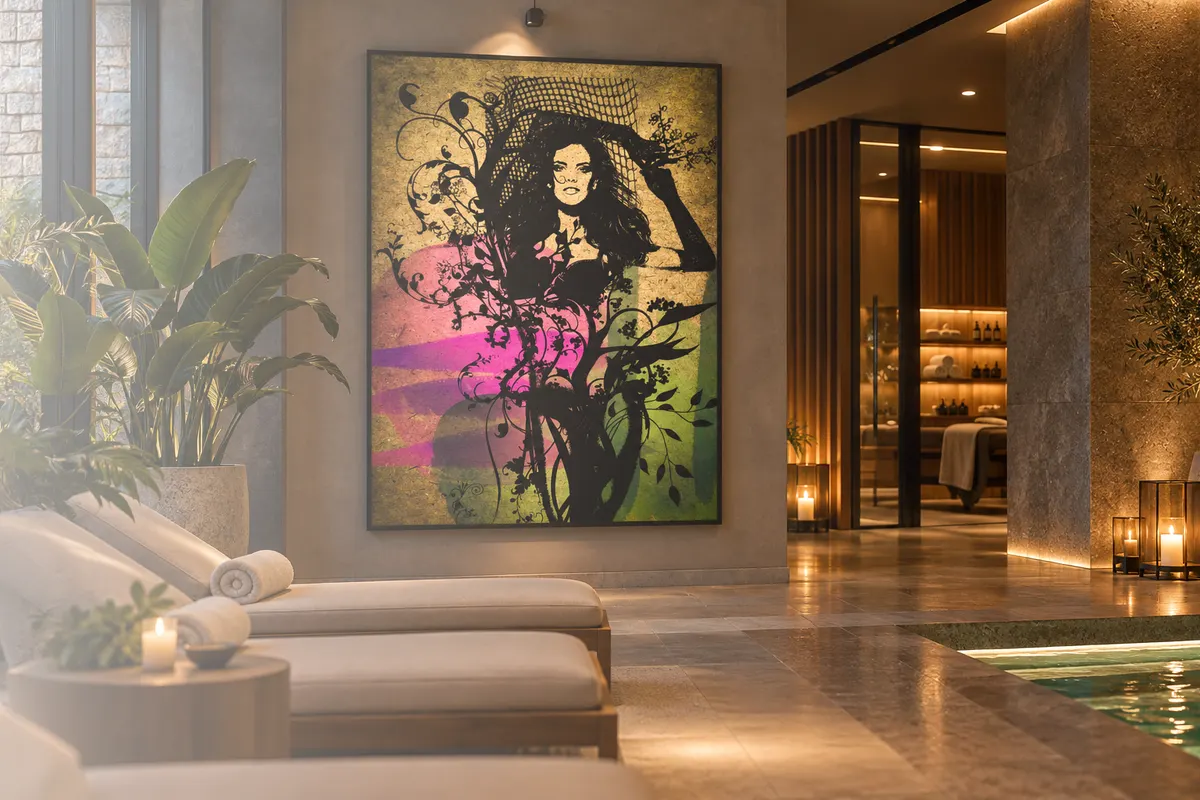
A professional art program aligns selection, spacing, lighting and installation. Editorial visualisation featuring real artwork by Dan St. Andrei.
Protecting the value of the collection
For owners and operators, a collection is an asset, and it should be managed like one. Records of provenance, edition details, condition at delivery and care requirements make insurance, valuation and future reinstallation straightforward. A professional partner treats this record-keeping as part of the work, not as an optional extra.
The same applies to relationships with artists. Fair terms, timely payment, proper credit and respect for the integrity of each work build the kind of trust that makes better projects possible. Properties known for treating artists well tend to find that artists want to work with them.
Working with consultants and designers
Art consultants and interior designers carry the relationship with the client, and a good production partner understands that role. The aim is to extend the consultant’s expertise, not compete with it.
In practice, that means working inside the consultant’s process: responding to the curatorial framework, producing mock-ups and samples to scale, adapting formats to architectural drawings, and communicating through a single point of contact. It also means discretion. Many projects are confidential until opening, and a professional partner treats names, plans and imagery accordingly.
Quality control is a process
Quality is not a promise made at the beginning; it is a series of checks made along the way.
Approval of references and samples before production starts.
Proofing of color, tone and detail against the original work.
Inspection of every finished piece before it leaves the workshop.
Protected packing and traceable delivery, with condition reports where appropriate.
Supervised installation, so that placement, fixings and lighting do what the design intended.
Each step is small. Together they are the difference between a collection that feels coherent and one that feels assembled.
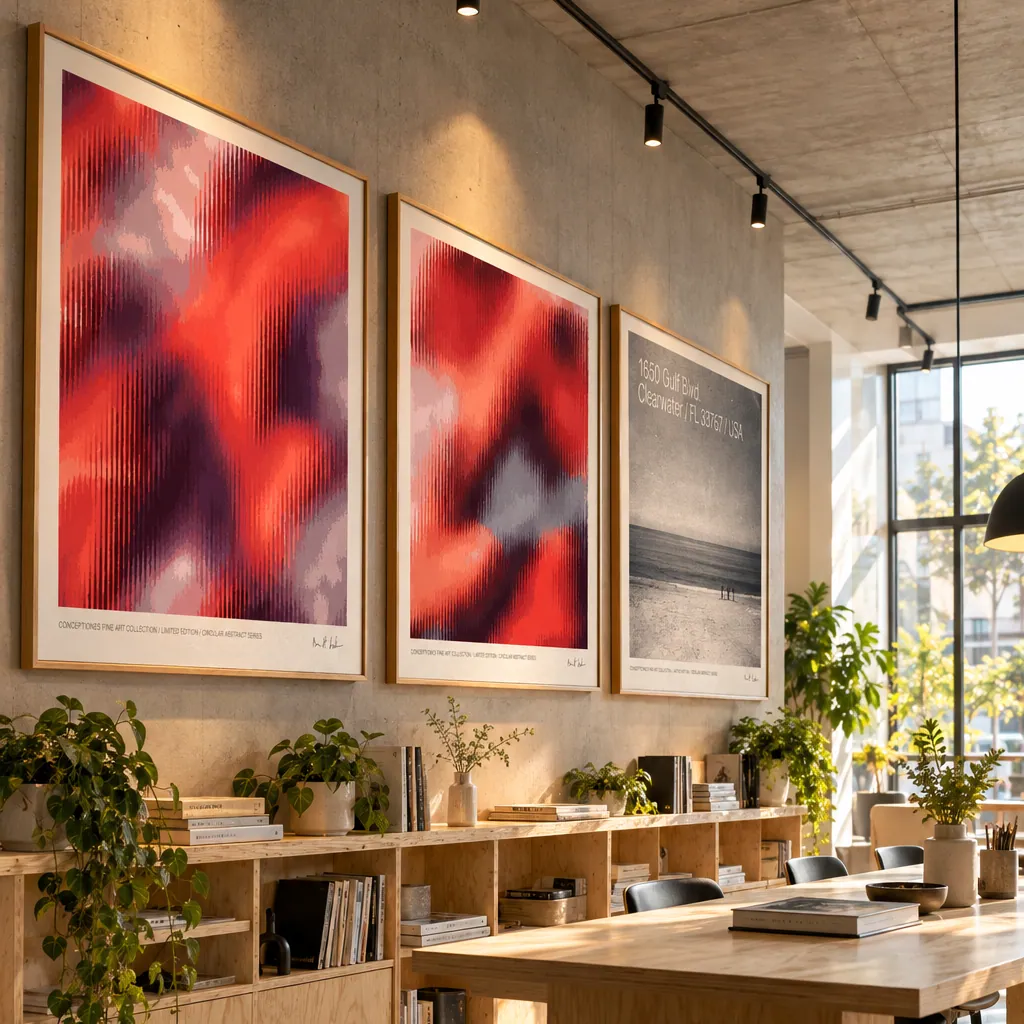
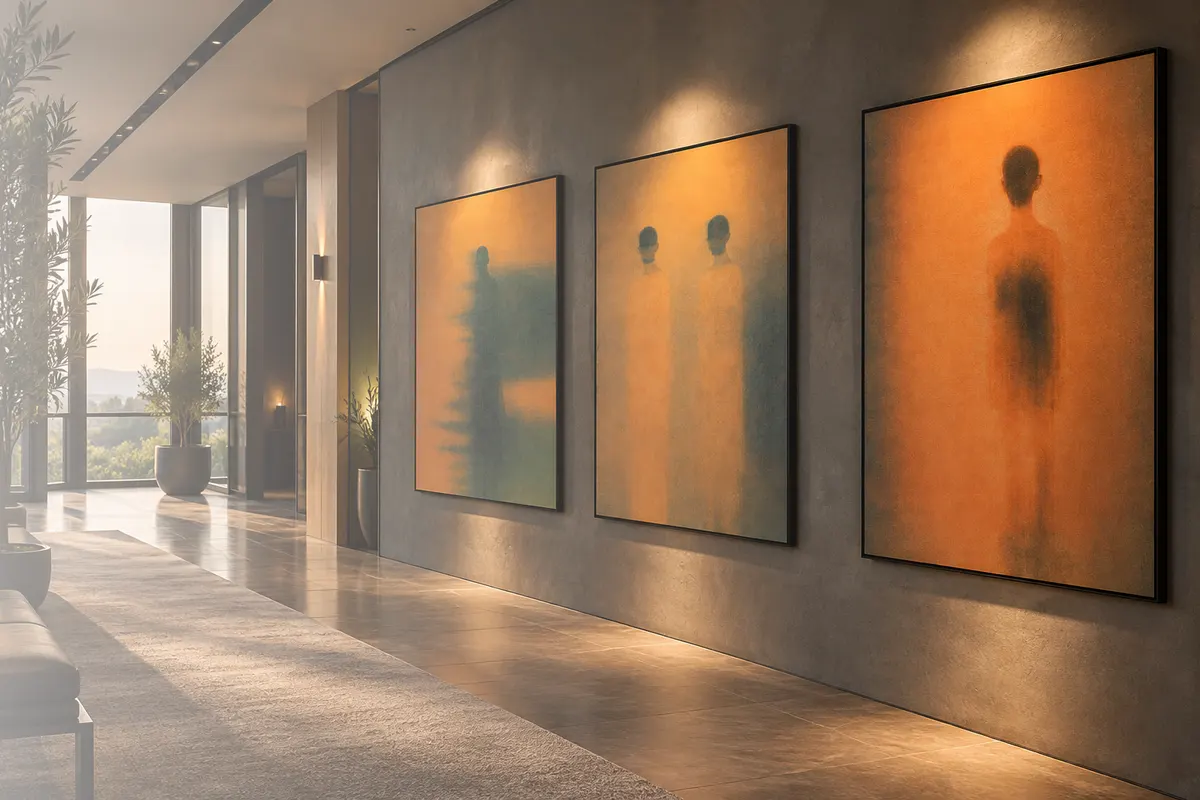
Consistent alignment and finish are visible outcomes of quality control. Editorial visualisation featuring real artwork by Dan St. Andrei.
Questions worth asking any art partner
Before you commit, a few direct questions will tell you a great deal:
Who will be my day-to-day contact, and who makes final decisions?
How do you structure budgets, and what is typically excluded?
What is the realistic timeline, and where are the main risks?
How are artist rights, credits and permissions handled?
What documentation do I receive at handover?
Can you show completed work and explain what you did on each project, not only what it looked like?
A confident partner will welcome these questions. An evasive answer is information too.
The long view
Art in hospitality is a long-term asset. It will be seen by thousands of guests, maintained by teams who were not part of the original project, and perhaps moved or reinstalled years from now. Professional practice is what makes that long life possible: clear records, durable production and relationships built on trust.
At Conceptiones, we develop and produce art for hospitality, interior design and architecture, with the structure that complex projects demand and the sensibility that art deserves. If you are planning a project and want to understand how we would approach it, you are welcome to begin with a conversation through our Discuss a Project page.
Frequently asked questions
What should a professional art partner provide?
A clear scope, transparent itemized budgets, realistic timelines built backward from opening, rights and permissions settled in writing before production, and documentation for every piece at handover.
When should art be specified in a hospitality project?
Early, alongside joinery and lighting, with a place in the schedule, a line in the budget and a named person responsible, rather than in the final weeks when walls are finished and budgets spent.
Why does documentation matter for a hotel art collection?
Records of provenance, edition details, condition at delivery and care requirements make insurance, valuation, maintenance and future reinstallation straightforward, and let a property’s team answer any question about what is on its walls years later.
What questions should I ask before choosing an art partner?
Ask who the day-to-day contact is, how budgets are structured and what is excluded, what the realistic timeline and main risks are, how rights and credits are handled, what documentation you receive at handover, and to see completed work with an explanation of what was done on each project.
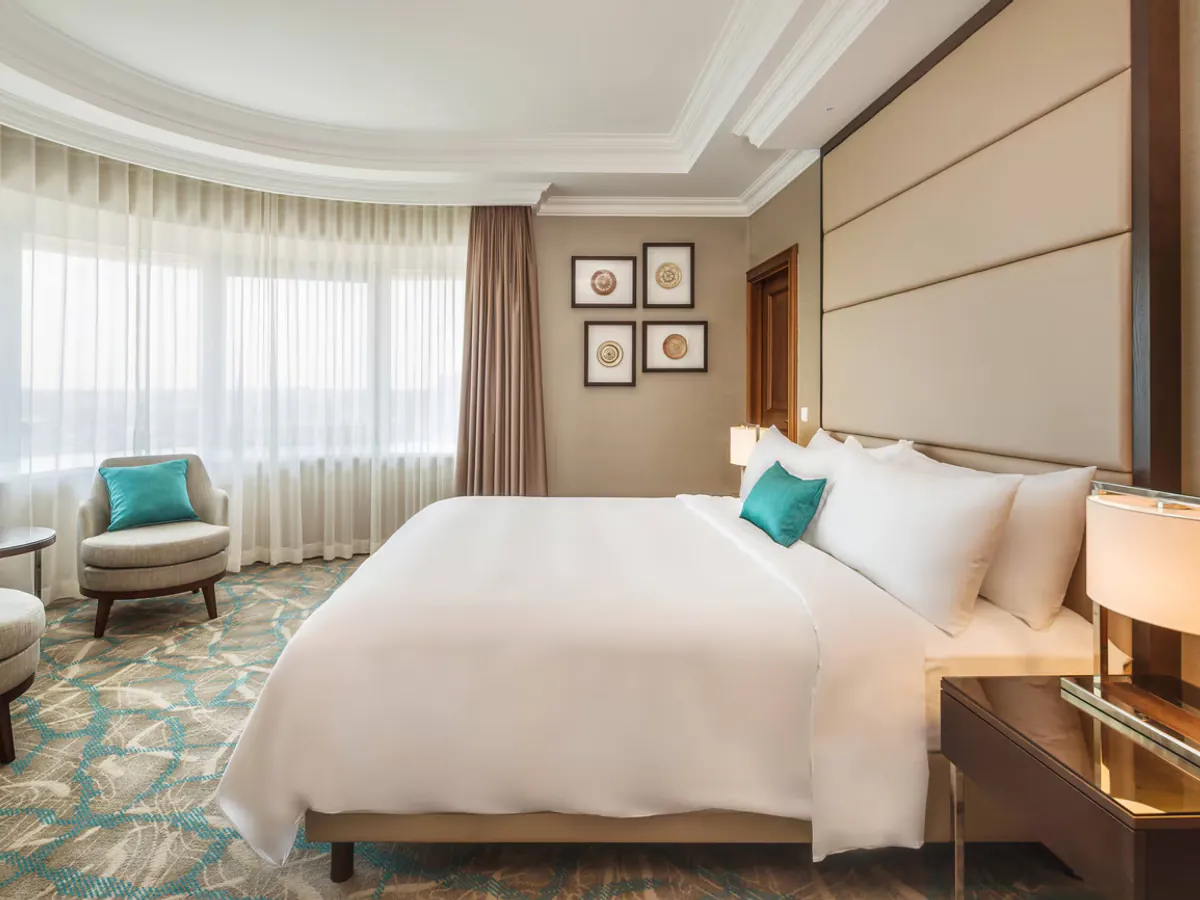
A hotel-wide artwork programme spanning guest accommodation, shared spaces and the VIP Lounge, including more than 1,600 ceramic works and 24 large-format paintings and museum-quality fine art prints.