Art for Hospitality: Building a Distinctive Hotel Art Program
How original work turns a room into a place people remember
By Dan St. Andrei, Creative Director, Conceptiones · Art in Spaces · 8 min read · Image: Dan St. Andrei
Walk into a well-designed hotel lobby, restaurant or office and you will notice the furniture, the lighting, the materials. A day later, you will probably remember only one thing: the piece on the wall that made you stop. That small pause is what art does for a space, and it is something no amount of styling can fake.
For years, art in commercial interiors was treated as the last step of a project: a few framed pictures chosen to match the upholstery, hung once the budget had been spent elsewhere. That approach is fading. Owners, designers and operators increasingly understand that the work on the walls can carry as much of a venue’s identity as its name, its menu or its logo. This article looks at why that shift is happening, where art makes the biggest difference, and how to build an art program that feels intentional rather than decorative.
From decoration to identity
Decoration answers the question “what will fit here?” Art answers a different one: “what is this place about?”
A decorative print says nothing about where you are. It could hang in a hotel by the sea or in a clinic in a business park. An original work, or a carefully chosen edition by a living artist, carries a point of view. It tells guests who made the space, what the owners value and what kind of experience to expect. Over time, those signals add up to something that behaves very much like a brand: recognizable, consistent and difficult to copy.
This matters because people no longer choose spaces only for function. A bed, a meal or a desk can be found anywhere. What people remember, photograph, recommend and return to is atmosphere, and atmosphere is built from details that feel considered.
Art and the sense of place
The most memorable interiors belong to their location. They could not be moved elsewhere without losing something, and art is one of the most direct ways to achieve that.
A thoughtful art program acts as a bridge between a property and the culture, history and landscape around it. It can draw on regional craft, on the colors and textures of the surrounding terrain, on the stories of the building itself. In a historic property, new work can enter into dialogue with the architecture, honoring the past while showing that the place is still alive. In a contemporary building, art can supply the memory and warmth that new construction often lacks.
Seen this way, art is a form of storytelling. It lets a property say, without a word of copy, where it stands and why it matters. Guests who feel that connection experience the destination more deeply, and they carry a more personal memory of their stay.
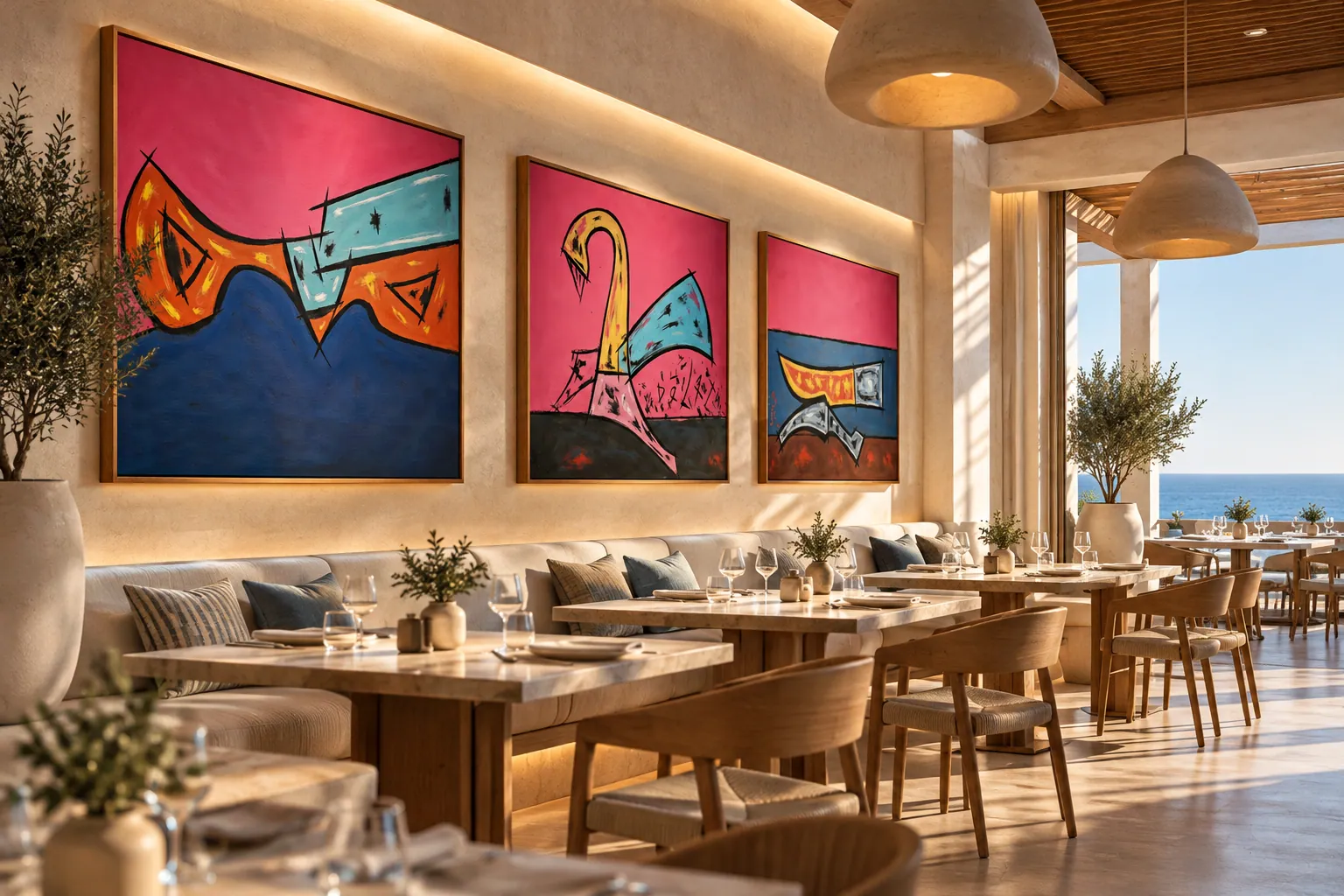
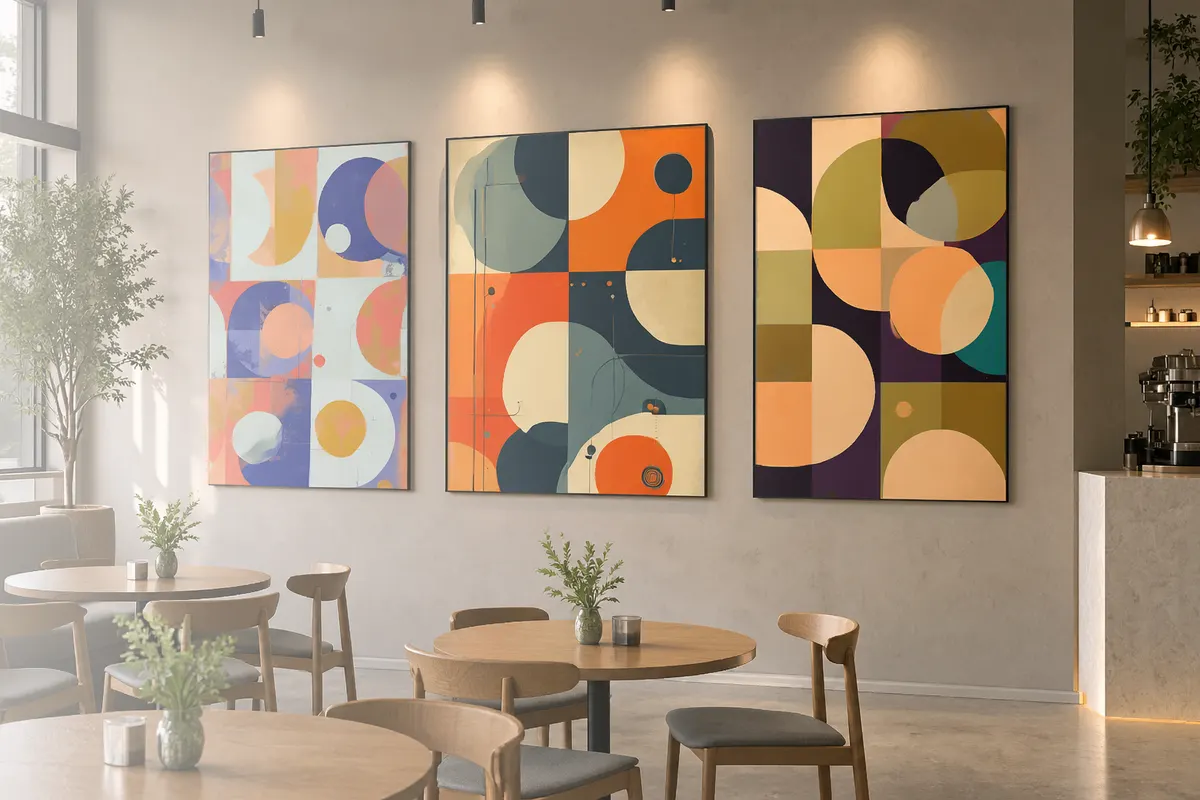
A coordinated artwork series can give a restaurant its own visual identity. Editorial visualisation featuring real artwork by Dan St. Andrei.
Art and emotion
Spaces are experienced with the body before they are understood with the mind. A lobby that surprises, a corridor that rewards a second look, a room with a work that seems to belong there: these moments shape mood, curiosity and memory.
Original art invites people to slow down and engage. It turns passive observers into participants, and that engagement is what stays with guests after they leave. It is also what they describe to friends, which is why an intelligent art program often does more for a property’s reputation than any single amenity.
Where art does the most work
Not every corner needs a masterpiece. The aim is to place work where people actually pause.
Arrival spaces. Lobbies, reception areas and entrances set expectations in seconds. A single strong piece here can replace pages of brand copy.
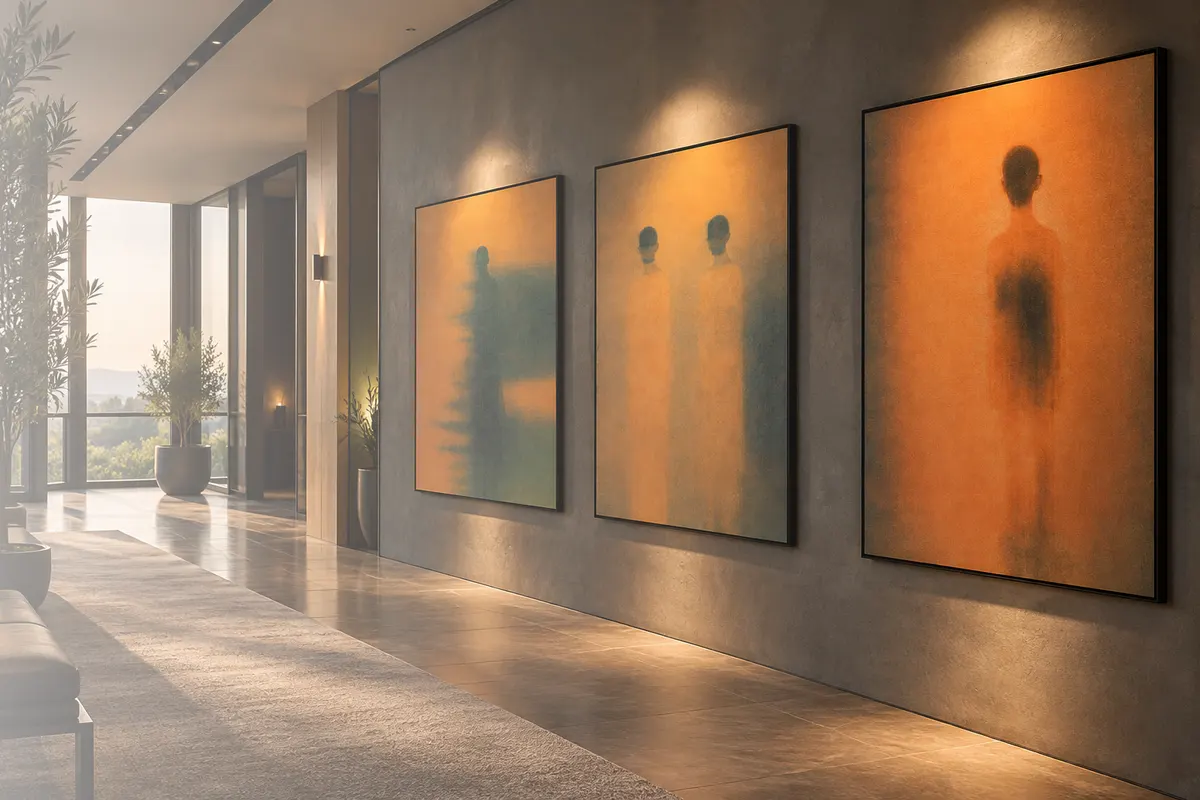
Places of waiting. Corridors, elevator halls, lounges and the stretch outside a meeting room are moments when attention is free. Art turns dead time into something closer to a small discovery.
Rooms for lingering. In restaurants, bars, suites and boardrooms, people stay long enough to look closely. This is where series, details and quieter works reward attention.
Moments of surprise. An unexpected piece in a stairwell, a restroom or beside a service door shows that the care did not stop at the obvious places. Guests notice this, and they talk about it.
Outdoor and threshold spaces. Terraces, courtyards, gardens and entrances allow work to engage with changing light and seasons, extending the experience beyond the walls.
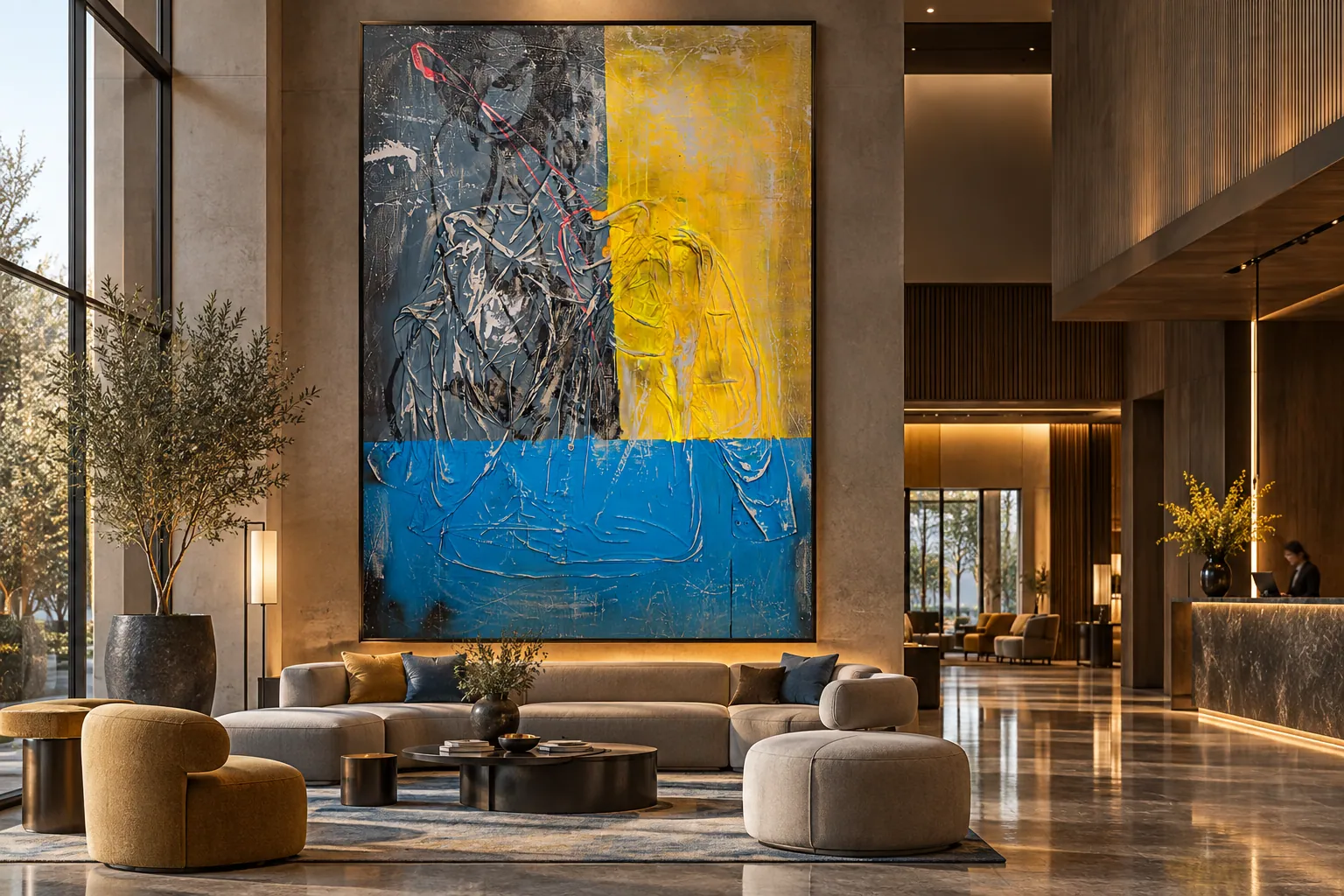
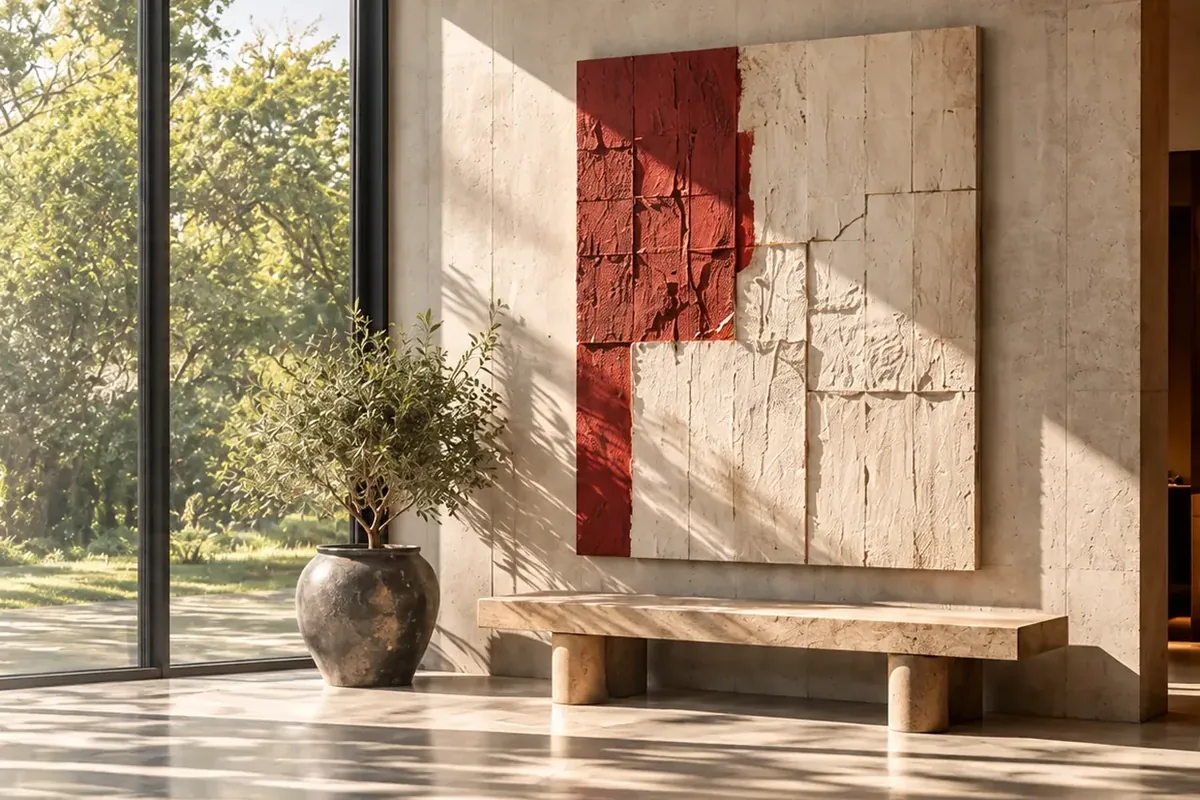
Scale and placement allow one artwork to define an arrival space. Editorial visualisation featuring real artwork by Dan St. Andrei.
Three principles for placing art well
1. Let the work breathe. Crowding a wall with many small pieces weakens each of them. One well-scaled work with generous space around it will almost always do more than a gallery wall of compromises.
2. Think in conversations, not objects. The best interiors let pieces speak to each other and to the architecture: a shared palette, a recurring theme, a contrast in scale. A curator’s eye matters less for the individual choices than for the relationships between them.
3. Respect the light. Fine work deserves proper lighting and, for photographic and paper-based pieces, sensible protection from direct sun. A great print lit badly will always look like a poor one.
Building an art program, step by step
Define the role of art. Before buying anything, decide what art is supposed to do. Should it express a local identity, set an international tone, support a hospitality concept, or simply make employees and visitors feel looked after? The answer shapes everything that follows, from budget to medium.
Choose a curatorial thread. A program works best when there is a thread running through it: a region, a theme, a technique, a handful of artists with a shared sensibility. The thread gives the collection coherence without making it monotonous.
Mix originals and editions. Unique works, such as paintings and drawings, suit the key locations. Limited-edition prints, produced to museum standards, make it possible to extend the same quality across many rooms while keeping each piece numbered, signed and documented. For larger venues, this combination is often the most practical way to build a collection that is both ambitious and sustainable.
Work with artists directly. Commissions, site-specific pieces and long-term relationships give a space something that cannot be bought off a shelf: a story. Artists also bring their own audiences, which turns an interior into a destination.
Tell the story. Credit the artists, label the work, publish the collection on your website and let your team speak about it with confidence. Art that nobody knows about is only furniture.
A long-term asset and a cultural contribution
Well-chosen art is one of the few elements of an interior that can gain meaning, and sometimes value, with time. Furniture wears out and finishes date. A documented collection of original works and numbered editions becomes part of a property’s assets and part of its history.
It also changes how a venue is seen. Properties that support artists, through commissions, exhibitions or long-term collaborations, take part in the cultural life around them. That commitment is noticed by guests and by communities, and it builds a kind of reputation that advertising cannot buy.
Where to begin
At Conceptiones, we develop and produce art for hospitality, interior design and architecture, working alongside art consultants, designers and operators from the first idea to the final installation. If you are planning a hotel, a restaurant, an office or a residential project and would like to explore what an art program could look like, we would be glad to start the conversation.
Frequently asked questions
What is the difference between decoration and art in a commercial interior?
Decoration answers the question of what will fit a space. Art answers the question of what the place is about. An original work, or a carefully chosen edition by a living artist, carries a point of view that tells guests who made the space and what its owners value.
Where should art be placed in a hotel or restaurant?
Where people actually pause: lobbies and entrances, corridors and lounges where they wait, rooms where they linger, unexpected corners such as stairwells, and outdoor thresholds such as terraces and courtyards.
How do you build an art program for a hospitality project?
Define the role of art, choose a curatorial thread, mix unique works with limited editions, work with artists directly, and tell the story through credits, labels and publication.
Is art a long-term asset for a property?
A documented collection of original works and numbered editions becomes part of a property’s assets and history, and it can gain meaning and sometimes value over time.
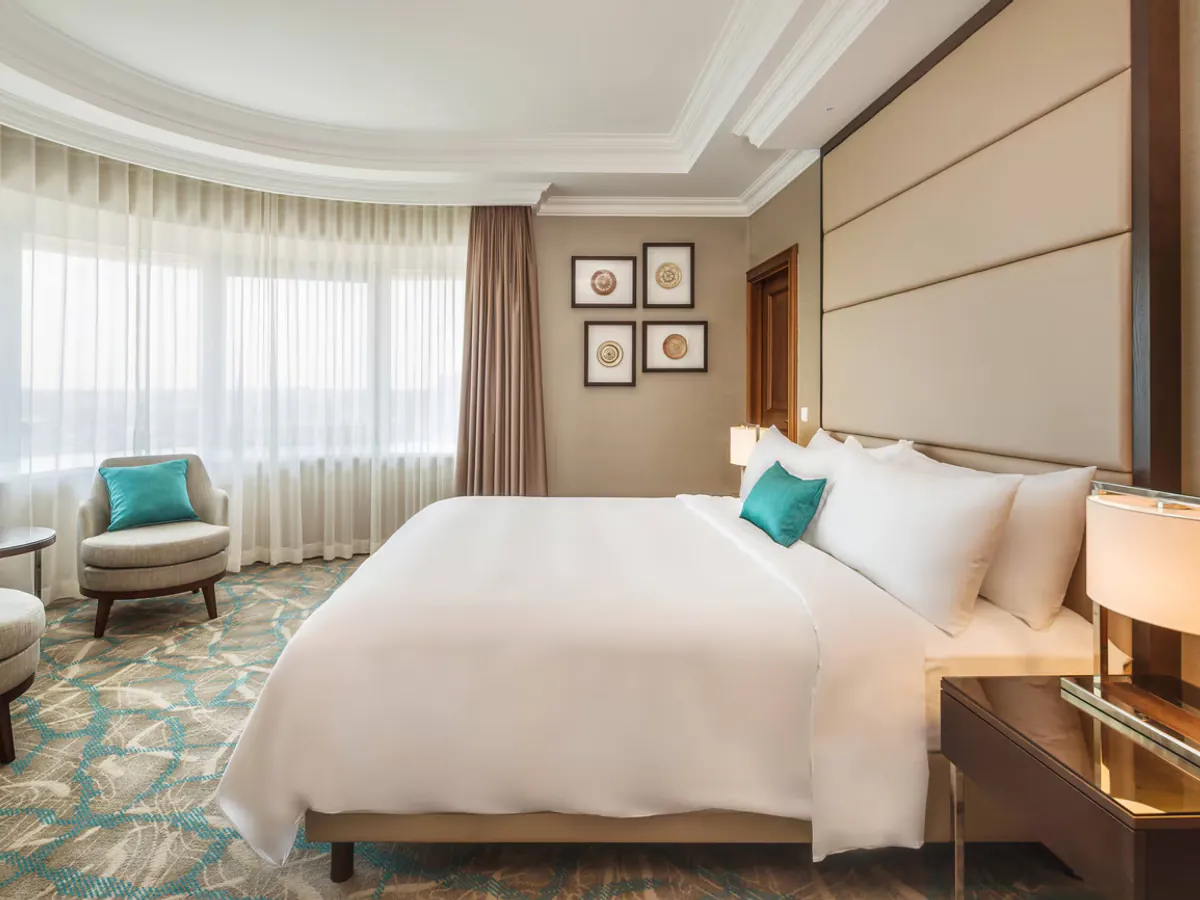
A hotel-wide artwork programme spanning guest accommodation, shared spaces and the VIP Lounge, including more than 1,600 ceramic works and 24 large-format paintings and museum-quality fine art prints.